

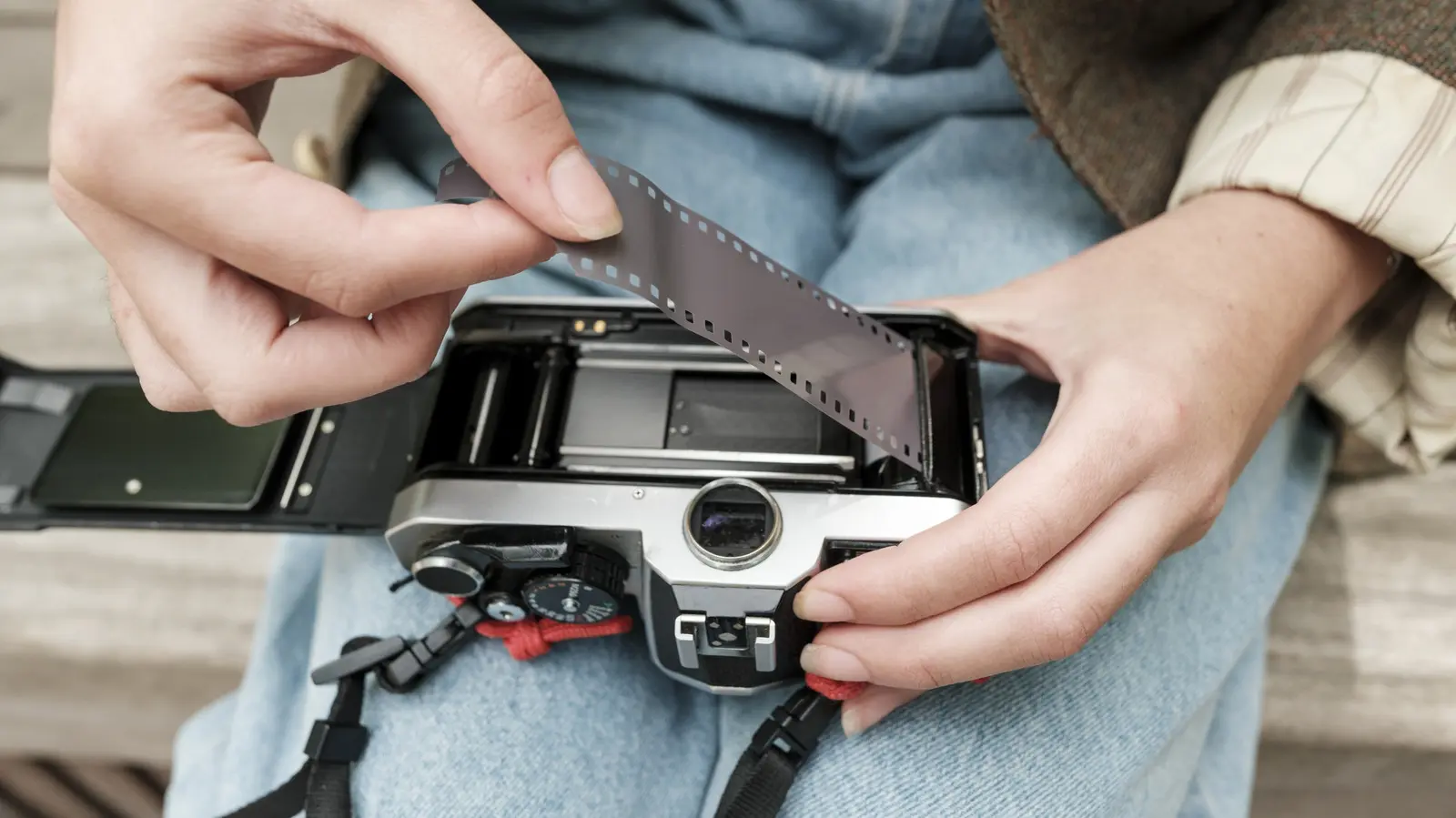
Technology history is full of household names that once crafted products very different from the ones that made them famous. Few categories show this better than cameras. The photography market has experienced enormous disruption, moving from film to digital and then falling under the shadow of the smartphone. Dedicated cameras used to be essential for recording weddings, birthdays, holidays, and news events. Today, many consumers seldom buy a separate camera because the one in their pocket is good enough for most images. This shift has caused brands that were once central to photography to change direction or disappear entirely.
When people gathered around the water cooler twenty-five years ago to discuss the latest technology, the conversation had a different texture than it does today. Innovation now moves at such a rapid pace that yearly trends are common, and entire industries can be remade in a short period. The consumer electronics sector provides countless examples of companies that missed a turning point or simply chose to invest elsewhere. Photography is one of the clearest cases, as brands once known for lenses and shutters now focus on medical equipment, watches, business solutions, or phones. In this article, we look at four technology companies that made cameras for years before leaving the field: Olympus, Casio, Minolta, and Samsung.
Olympus
Olympus holds a special place in photography history. The company was established in 1919 as a manufacturer of microscopes and other optical equipment. It later expanded into cameras, debuting the Semi-Olympus I in 1936. This folding camera featured the bellows design commonly associated with early photography. It was positioned as a relatively accessible model in its era, yet it still cost more than the average Japanese worker earned in a month. Despite its price, the Semi-Olympus helped establish Olympus as a major player in the camera industry.
Decades of innovation followed. One of the company’s more memorable creations was the Olympus PEN F, which arrived in 1963. It was marketed as the world’s only half-frame camera, meaning it could expose 72 images on a standard roll of 36-exposure film. That feature made it a favorite among travelers and anyone who wanted more photographs from each roll. As digital imaging emerged, Olympus embraced the transition with the Camedia line in 1996, later introducing waterproof and drop-resistant digital models that attracted outdoor adventurers. The brand also became known for its popular line of PEN compact mirrorless cameras, which appealed to people looking for a light and stylish alternative to bulky DSLRs.
Nevertheless, the entire standalone camera industry began to struggle as smartphones improved. By the late 2010s, Olympus faced years of financial losses in its imaging division. In 2020, the company signed an agreement to sell its camera business to Japan Industrial Partners, another step in its transformation. Olympus Corporation now focuses mainly on medical technology, such as endoscopes and minimally invasive surgical instruments. The camera side of the business lives on under OM Digital Solutions, which continues to produce tough compact cameras and mirrorless models for enthusiasts. Olympus itself, however, is no longer a camera maker in the way it was for most of the twentieth century.
Casio
For many people, Casio is synonymous with calculators, watches, keyboards, and other compact electronics. It may come as a surprise to learn that Casio also contributed to the early digital camera market. The company, formally named Casio Computer Co Ltd, was an inventive player in consumer electronics. In 1987, it released the VS-101, a still video camera that predated true digital photography for consumers. Then, in 1995, Casio introduced the QV-10, widely recognized as the first consumer digital camera with an integrated LCD screen.
The QV-10 was a significant advancement at the time. Instead of composing a photograph through a tiny viewfinder, owners could look at the LCD screen to line up their shots. They could immediately see the result of a picture they had just taken, review it, and delete it if necessary. Today, that level of convenience is a basic assumption for anyone with a smartphone, but in the mid-1990s, it was remarkable. The QV-10 could also be connected to a TV, VCR, or computer so that images could be viewed on a larger display. This may seem ordinary now, but it was a novel feature that helped consumers understand the potential of digital photography.
Casio continued to invent unusual camera products after the success of its QV series. It released a wristwatch camera that allowed wearers to snap images from their wrist, and it later created the distinctive EX-FR10, a modular camera whose lens and LCD screen could be separated and used remotely. Despite these creative efforts, Casio’s camera division struggled to stay profitable. The market for dedicated cameras was already shrinking because phones were becoming the default way for people to take pictures. In 2018, Casio officially exited the camera business. Today, its focus is on company areas such as watches, medical devices, business systems, and educational products, all fields where it believes it can maintain a stronger competitive edge.
Minolta
Minolta has a long and complex history that stretches back to the early twentieth century. Kazuo Tashima, the founder, had a different vision from many other Japanese camera entrepreneurs. Rather than beginning with entirely original technical development, his first venture imported cameras from Germany and rebranded them for the Japanese market. The original company name, Nichi-Doku Shashinki Shoten, reflected these German-Japanese links. During the 1930s, under the corporate name Chiyoda, Tashima’s team designed its first true Minolta camera. The brand name was derived from the phrase Mechanisms, Instruments, Optics, and Lenses, according to the original article, an acronym that neatly summarized the company’s priorities.
Over the following decades, Minolta produced many important cameras. The Minolta Vest Camera, for instance, was designed to compete with Kodak’s pocket-friendly models. The company also made history by introducing the first coincidence-type rangefinder and later supplied optical equipment to Japan’s military during World War II. After the disruption of the war, Minolta rebuilt itself and, by the 1960s, was again thriving. One of its prominent cameras, the Hi-Matic, gained an unusual distinction when astronaut John Glenn carried it into space. Minolta also expanded into photocopiers and other office equipment, which helped diversify its operations.
The camera industry, however, became increasingly competitive during the 1990s and early 2000s. Minolta experienced financial strain and merged with Konica in 2003, creating Konica Minolta. The new company continued to sell cameras for a short period, but in 2006 it exited the business entirely and sold part of its imaging assets to Sony. This decision ultimately helped Sony build its highly successful Alpha line of interchangeable-lens cameras, which drew on technologies developed by Minolta. If you see a new camera carrying the Minolta label these days, it is not produced by Konica Minolta. The trademark was granted to another entity in 2015 and is now licensed by Elite Brands Inc., which has placed the name on various digital products. Nonetheless, the Minolta legacy remains important among photography historians and collectors.
Samsung
Samsung is a massive electronics name, although many people have already forgotten that it sold cameras. Today the company makes everything from smartphones and televisions to appliances, smart watches, rings, and wireless headphones. Samsung’s history in consumer electronics goes back to the late 1960s, when Samsung-Sanyo Electronics was established in South Korea. The joint venture initially focused on televisions, with its first product being a black-and-white set. By the mid-1970s, Samsung was also making refrigerators and washing machines, and it later expanded into the United States. Cameras became a part of this broad product portfolio over time, although they never generated the same universal recognition as the company’s phones and home appliances.
Samsung entered the film camera market at some point during its expansion, and by 1996 it had released its first digital camera. The company eventually produced both point-and-shoot cameras and DSLRs, although its DSLR models were often rebadged Pentax bodies developed under a partnership with the established Japanese brand. Samsung made notable contributions to digital camera design even as the market began to shift. In 2009, it unveiled the ST500, sometimes called the ST550 in certain regions, which was the first digital camera with a front-facing screen specifically designed for self-portraits. That innovation anticipated the modern smartphone selfie era by several years.
The most Samsung-like camera was perhaps the Galaxy Camera, released in 2012. As its name suggests, it ran the Android operating system and offered direct access to social media apps from the camera itself. It had a built-in screen and a large sensor, but it was not a phone. Owners could not make ordinary cellular calls, even though it looked like a connected device. The Galaxy Camera attempted to redefine what a smart camera could do, but it remained a niche product. By that time, Samsung was already pouring far more resources into its Galaxy S smartphone series, which launched in 2010 with a five-megapixel camera.
Smartphones quickly became the main camera for most consumers, cutting deeply into sales of dedicated cameras across every company in the industry. Samsung never made a grand public announcement saying it was done with cameras. However, in 2016, an official company post on Twitter implied that the camera division had already closed. The Galaxy phones had effectively taken the place of standalone cameras in the company’s own product range, as well as those sold by many other brands. This shift was not unique to Samsung. It represented the final defeat of affordable consumer cameras by the one device so many people carry with them at all times.
Source:SlashGear News