

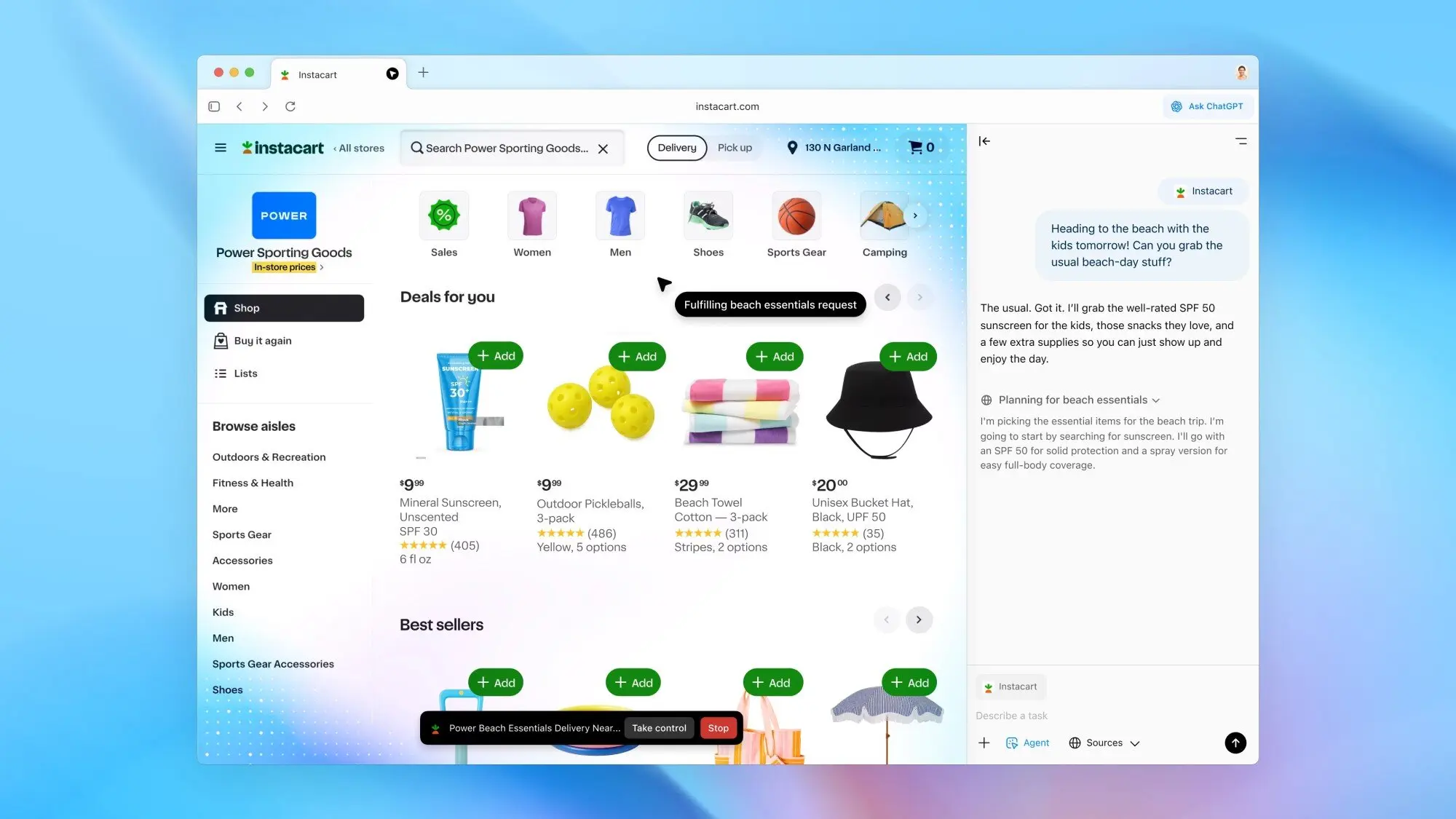
OpenAI is shutting down the ChatGPT Atlas browser, a standalone AI-powered web browser that launched only nine months ago. The decision comes as part of a series of updates announced alongside today's GPT 5.6 release, which introduces new browsing capabilities across OpenAI's product ecosystem. Atlas will reach its end of life on August 9, 2026.
The ChatGPT Atlas browser was initially launched as an experimental product designed to integrate AI directly into the browsing experience. It allowed users to interact with ChatGPT while navigating the web, offering features such as real-time summarization, contextual chat, and AI-assisted form filling. Despite its innovative approach, the browser never achieved widespread adoption, and OpenAI has now decided to redirect resources toward more integrated solutions.
What Led to the Shutdown?
According to James Sun, a member of OpenAI's browser team, the company learned valuable lessons from Atlas users about how agents can improve browsing and productivity on the open web. These insights directly informed three major updates rolling out today:
- Enhanced ChatGPT Desktop App Browser: The ChatGPT desktop application is receiving a significant upgrade to its in-app browser, now supporting multiple tabs, a built-in password manager, autofill functionality, and seamless integration with ChatGPT. This makes the desktop app a more powerful tool for research and daily web tasks.
- Cloud-Based Browsing for Work Mode: Work mode, a feature designed for professional users, now includes access to a browser running in the cloud. This allows users to run browsing sessions that are independent of their local machine, improving performance and enabling persistent workspaces.
- Side Chat Extension for Chrome: A new Chrome extension brings the power of ChatGPT and Codex directly into Google's browser through a side panel. Users can invoke ChatGPT, ask questions, get code snippets, or summarize pages without leaving their current tab.
These features consolidate the Atlas functionality into OpenAI's existing products, eliminating the need for a separate browser. Sun stated in a social media post, "All these capabilities were built on what we learned from Atlas users who took a leap of faith on a new browser. You taught us how agents can help make browsing and doing work on the open web better."
Timeline of ChatGPT Atlas
ChatGPT Atlas was launched in October 2025 as an experimental project under the ChatGPT umbrella. It was initially available only to ChatGPT Plus and Pro subscribers, offering a curated web experience with AI overlays. OpenAI positioned it as a competitor to other AI-enhanced browsers like Microsoft Edge Copilot and Google Chrome's experimental features. However, user feedback highlighted several limitations, including a limited extension ecosystem, lack of support for certain web standards, and performance issues on heavy sites. The browser never left beta status.
In March 2026, OpenAI introduced a limited public beta for Atlas, but by then the market had shifted. Competitors like Arc Browser and SigmaOS had already integrated robust AI features, and many users preferred sticking with mainstream browsers. OpenAI's own internal data showed that Atlas users heavily relied on the ChatGPT integration features, which could be delivered more effectively through extensions and native desktop apps.
What This Means for Users
Current Atlas users will have a few weeks to transition. OpenAI has promised to share detailed deprecation instructions via the ChatGPT app and email. The company recommends moving bookmarks and settings to the enhanced desktop app browser or the new Chrome extension. Atlas will stop functioning on August 9, 2026, after which access will be permanently revoked.
Additionally, OpenAI is offering affected users a one-month extension of their ChatGPT subscription at no cost as compensation for the inconvenience. Users are encouraged to explore the new cloud-based browsing feature in Work mode, which retains many of the AI agents that made Atlas unique.
Broader Context: AI and the Browser Market
The shutdown of Atlas reflects a broader trend in the tech industry: companies are increasingly embedding AI into existing browser frameworks rather than building standalone AI browsers. Google, Microsoft, and Brave have all invested in AI copilots that work within their current products. OpenAI's decision to pivot toward desktop app enhancements and browser extensions aligns with this strategy.
Moreover, the announcement coincides with GPT 5.6, which introduces improvements in reasoning, multi-modal abilities, and faster inference. The new model powers the upgraded browsing features, making them more responsive and capable. This integration ensures that users can access cutting-edge AI without needing to switch to a specialized browser.
James Sun confirmed that the Atlas team will be reassigned to work on the desktop app and cloud browsing infrastructure. Some engineers will also join the Chrome extension development team. This internal restructuring aims to accelerate the delivery of AI agents across all platforms.
Industry analysts view the move as pragmatic. "OpenAI realized that building and maintaining a full browser is incredibly resource-intensive," said a technology strategist who wished to remain anonymous. "By leveraging the existing user bases of Chrome and their own desktop app, they can reach more people with fewer engineering costs."
As the August 9 deadline approaches, Atlas users are advised to export any local data and explore the new alternatives. OpenAI has set up a dedicated help center page for the transition, with step-by-step guides for migrating bookmarks, passwords, and AI customizations. The company has also confirmed that the Atlas codebase will be open-sourced under a permissive license, allowing the developer community to continue evolving the project independently.
This announcement marks the end of a short but impactful chapter in the evolution of AI browsers. While Atlas may not have achieved long-term success, its legacy lives on in the new features rolling out today. The enhanced desktop browser, cloud-based Workspace browsing, and the Chrome side chat extension are all direct results of the experiments conducted within Atlas. For AI enthusiasts, the future of browsing lies not in a standalone tool but in the seamless integration of intelligent agents into the tools they already use every day.
Source:Android Authority News