

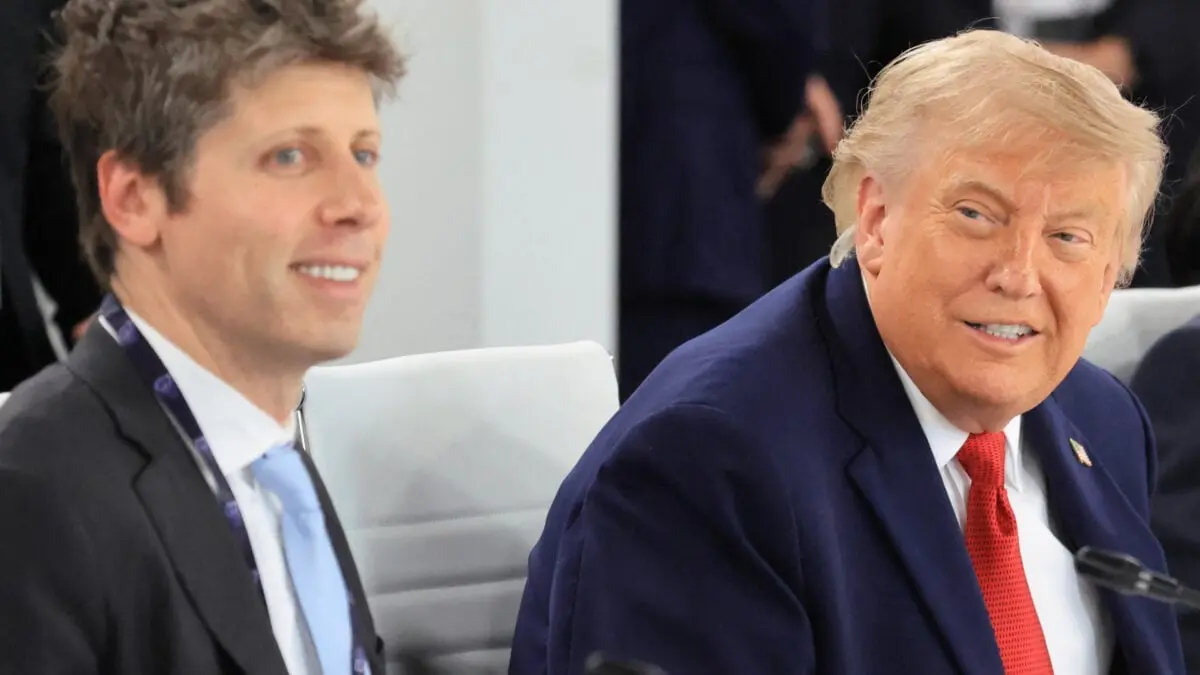
Top economic officials from major nations gathered this week in North Carolina for a series of G20 meetings, and artificial intelligence has become the central point of tension. Many foreign delegations arrived with proposals for shared governance, risk management and international safeguards. The Trump administration, according to officials familiar with its plans, arrived with a different message: do not overregulate AI.
The administration is making its case at the G20 Innovation Ministerial in Raleigh-Durham, an event co-hosted by Commerce Secretary Howard Lutnick and White House technology adviser Michael Kratsios. Fireside chats and speeches at the ministerial include some of the most powerful executives in American technology. The event is meant to align major economies behind the United States' vision of AI development ahead of the G20 leaders' summit scheduled for December in the United States.
The U.S. delegation is asking commerce and technology ministers to endorse a new framework called the Carolina Principles. A White House official said the principles are designed to encourage investment in foundational research, strengthen commercial opportunities for AI companies, and reserve new regulation only for truly novel concerns. The goal is to remove barriers that stand in the way of AI businesses moving research into commercial products as quickly as possible.
What is in the Carolina Principles?
The phrase "novel considerations" is central to the U.S. position. U.S. officials argue that most problems raised by AI systems, such as privacy violations, biased decisions or unsafe software, are already covered by laws written before AI was widespread. If an existing law can address a harm, they say, there is no reason to write a new one. Only when AI creates a genuinely new kind of harm would the Carolina Principles permit new regulation.
That interpretation is deeply contested. Consumer groups, labor unions and digital rights organizations have spent years trying to persuade governments that AI does create new risks because of its scale, opacity and ability to make automated decisions with limited human oversight. In their view, waiting to see a concrete harm before acting is reckless when AI is already being used in health care, hiring, criminal justice, finance and education.
European regulators have largely sided with that precautionary view. The European Union has adopted a risk-based AI law that categorizes systems by how dangerous they are, bans certain kinds of automated decision-making, and imposes transparency and testing obligations on high-risk tools. The Carolina Principles would push in the opposite direction by making new rules the exception rather than the rule.
Key facts at a glance
- The Trump administration is asking G20 commerce ministers to sign the Carolina Principles, a hands-off AI framework.
- Michael Kratsios, the White House tech adviser, is leading the push and has argued against treating every emerging technology as a first-of-a-kind policy problem.
- The principles emphasize foundational research, commercial AI growth and limited regulation, echoing U.S. deregulatory policy at home.
- Canada's delegation is advocating a middle ground between innovation and public trust and safety.
- UN Secretary-General Antonio Guterres has warned that AI innovation needs guardrails, and Bank of England Governor Andrew Bailey has warned of financial and cyber risks.
- The ministerial program includes OpenAI CEO Sam Altman, Nvidia CEO Jensen Huang, Elon Musk, Demis Hassabis, Mark Zuckerberg and David Sacks.
The U.S. delegation is framing the principles as necessary to maintain American leadership over China. For years, U.S. officials have argued that overregulation would slow innovation and hand Beijing an opening in the race to build more capable AI systems. The White House has already taken steps at home to reduce the federal government's direct involvement in AI safety testing and model evaluations, choosing instead to emphasize private research and competitive speed. The Carolina Principles would internationalize that domestic posture, making it harder for other governments to impose rules that could disadvantage U.S. companies in global markets.
Industry leaders attending the ministerial are largely aligned with the U.S. approach in public, though their private interests are not identical. OpenAI, for example, has asked regulators for clear rules in some areas while also opposing many restrictions that require detailed disclosure of models. Nvidia wants fewer barriers to exporting its chips, but also benefits from the enormous infrastructure investments that AI development requires. Meta has favored openly available AI models while also pressing regulators to allow its models to absorb copyrighted content. The appearance of these executives at a G20 ministerial is itself a political signal: the administration wants the world to see AI policy as a partnership between the government and the tech industry, not as a contest between independent regulators and companies.
Not every country at the meeting shares that vision. Canadian officials told reporters that their delegation intends to argue for policies that advance economic gains while preserving public trust and safety. The United Nations has similarly warned against treating AI as if it needs no oversight.
Source:Gizmodo News