

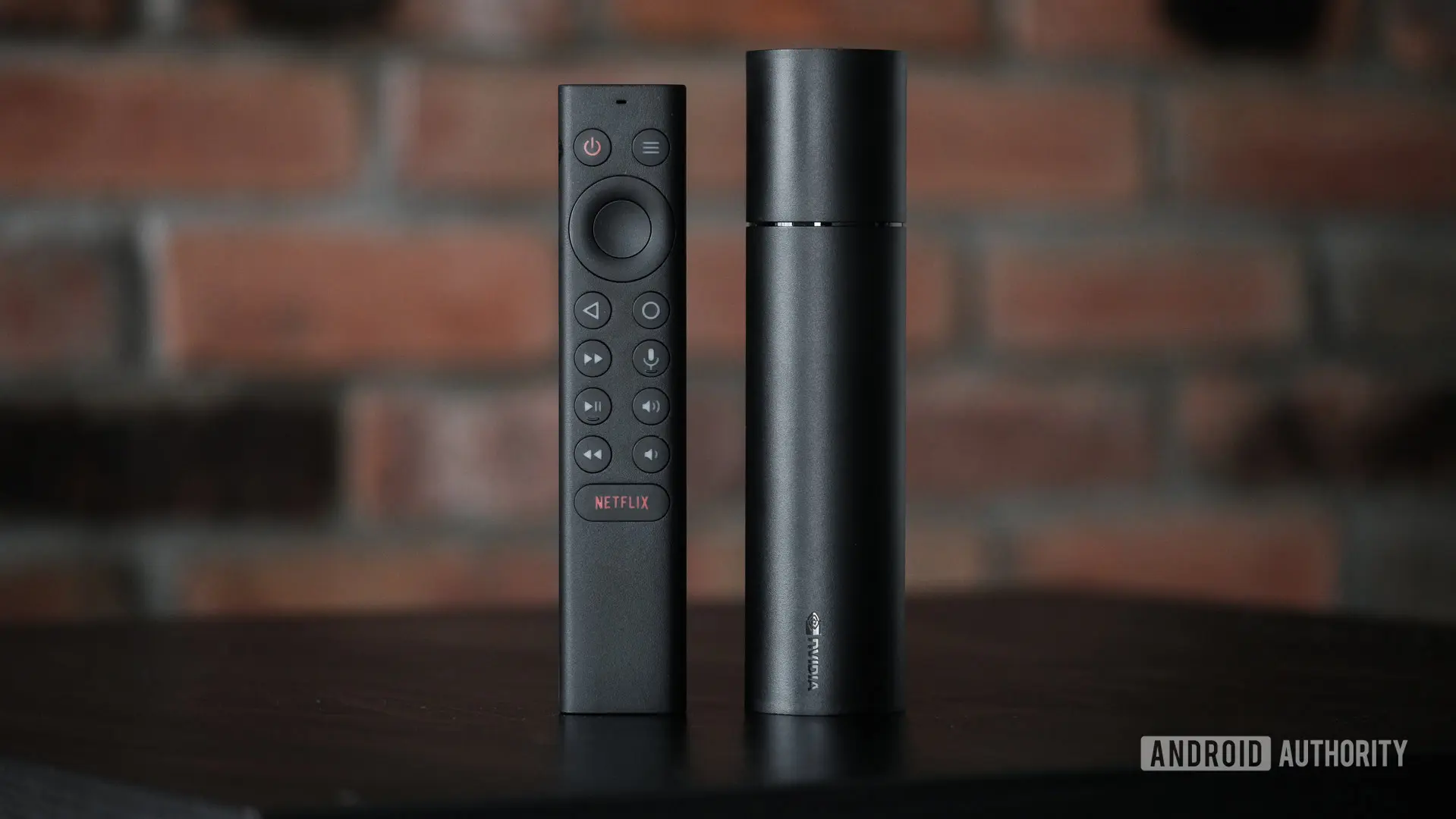
Streaming and entertainment hardware has seen its share of shifts over the years, but few devices have maintained the loyal following of NVIDIA's Shield TV. Recently, users noticed that the base model of the Shield TV, priced at $149, was missing from major retailers. NVIDIA has now provided a statement to Android Authority, clarifying the situation. The company explained that the Shield TV base model is largely out of stock due to demand. However, they did not confirm whether the device would ever return to store shelves.
The Shield TV has been a staple in the Android TV ecosystem since its launch. Originally released in 2015, it was one of the first devices to bring 4K HDR streaming and gaming capabilities powered by NVIDIA's Tegra X1 processor. The base model offered a streamlined experience with HDMI, Ethernet, and microSD expansion, making it a favorite among cord-cutters and media enthusiasts. Its firmware received regular updates, including the recent upgrade to Android TV 11, and NVIDIA promised over 10 years of support.
Background: The Shield TV Lineup
NVIDIA's Shield family includes two main variants: the standard Shield TV (sometimes called the base model) and the Shield TV Pro. The base model, often sold in a tube-shaped form factor, features 2GB of RAM and 8GB of storage, along with a remote and a power adapter. The Pro model, released in 2019, sports a more traditional rectangular design with 3GB of RAM, 16GB of storage, two USB ports, and a more powerful cooling system. The Pro is targeted at users who need extra storage for apps or emulators and those who want to use it as a Plex server.
Over the years, the Shield TV has built a reputation for excellence. It supports all major streaming services, including Netflix, Disney+, Amazon Prime Video, and Hulu, often in the highest quality formats. It also supports Dolby Vision HDR, Dolby Atmos, and AI-enhanced upscaling. The device has become a go-to for users who want a reliable, fast, and feature-rich streaming experience. Despite its age, the Tegra X1 chip remains competitive, and the continued software support has kept the Shield TV relevant long after other devices have been abandoned.
NVIDIA's Statement
In an email sent to Android Authority, NVIDIA stated: "The SHIELD TV base model is largely out of stock due to demand. We don't have any updates to share regarding future availability at this time. SHIELD TV Pro remains available, and the SHIELD platform continues to be supported with ongoing updates for more than 10 years." This statement is carefully worded. It admits demand is high, but it does not promise any restocking. The omission of a commitment to future availability suggests that NVIDIA may be reevaluating the product line.
Further evidence of a potential discontinuation comes from recent price drops on the Shield Remote. Retailers have slashed prices on the remote, which is a common sign that a manufacturer is clearing inventory. Combined with the lack of restock for the base Shield TV, it seems plausible that NVIDIA is phasing out the cheaper model while continuing to support the Pro variant. This would align with NVIDIA's historical practice of streamlining its product offerings, as they did with the original Shield Portable and Shield Tablet.
Possible Reasons for Discontinuation
Several factors could be driving NVIDIA's decision. First, the rising cost of memory components has made it harder to produce the base model at its $149 price point while maintaining adequate margins. The Shield TV uses DDR4 RAM and eMMC storage, both of which have seen price volatility in recent years. Second, the Pro model may offer better profit margins due to its higher price ($199) and additional features. Third, NVIDIA might be consolidating its product line to focus on the Shield TV Pro, which has proven more popular with enthusiasts and power users.
Another consideration is the changing landscape of streaming devices. The market has become crowded with options from Google (Chromecast with Google TV), Amazon (Fire TV Stick 4K Max), Roku, and Apple (Apple TV 4K). These devices offer similar features at often lower prices. While the Shield TV still holds an edge in gaming and local media playback, the average consumer may not need that extra power. NVIDIA may have decided to focus on the Pro model as a niche product for home theater enthusiasts, while letting the base model fade away.
There is also the possibility that NVIDIA is preparing a next-generation Shield TV device. Speculation about a Shield TV with the Tegra X1+ or even the new Orin chip has circulated for years. However, no credible leaks have emerged, and NVIDIA has been quiet about future hardware. Given that the Shield TV Pro continues to be sold and supported, any new device would likely be a high-end replacement for the base model, perhaps with updated connectivity like HDMI 2.1, Wi-Fi 6E, and support for newer codecs.
Impact on Consumers and the Market
For users holding out for a base Shield TV, the news is disappointing. The device offered a compelling value proposition: a powerful streaming stick with the Android TV ecosystem, gaming via NVIDIA GeForce NOW, and the ability to sideload apps. Its absence may force customers to either pay more for the Shield TV Pro or consider alternatives. The Fire TV Stick 4K Max, for example, offers similar specs at a lower price but lacks USB ports and the same level of software support. The Apple TV 4K is more expensive but offers deep integration with Apple services.
Gamers who rely on the Shield TV for streaming PC games through NVIDIA GameStream or GeForce NOW may be particularly affected. While the Shield TV Pro supports these services equally well, the lower cost of the base model made it an attractive entry point. Additionally, the Shield TV's AI upscaling is a unique feature that enhances lower-resolution content, a feature not available on competitors. Losing access to the base model means those features become available only on the more expensive Pro.
From a software perspective, NVIDIA has reaffirmed its commitment to the Shield platform. The company states that the platform will continue to receive updates for more than 10 years. This is good news for existing owners, as they can expect security patches, new features, and possibly even Android TV version upgrades. However, if the base model is truly discontinued, new buyers will have to purchase the Pro, which is still widely available from major retailers like Amazon, Best Buy, and NVIDIA's own store.
The Future of the Shield TV
It is worth noting that NVIDIA has not explicitly said the base Shield TV is discontinued. The company could be simply struggling to keep up with demand, and production may resume after a component shortage eases. However, the lack of a timeline and the simultaneous price cuts on accessories suggest otherwise. In the tech industry, when a company declines to confirm future availability for a product that is out of stock, it is often a death knell.
If the base Shield TV is indeed being retired, the Shield TV Pro becomes the sole Nvidia streaming device. This consolidation could simplify NVIDIA's product line and allow them to focus resources on a single model. The Pro already has a loyal user base and is often recommended by home theater enthusiasts. It may also open up the possibility for NVIDIA to develop a successor that builds on the Pro's strengths, perhaps incorporating a newer chip for 8K support or improved AI upscaling.
In the meantime, consumers who want a Shield TV experience have limited options. They can buy the Shield TV Pro, which is still in stock and likely to remain so. They can also look for the base model on third-party marketplaces like eBay or Amazon Warehouse, but prices may be inflated due to scarcity. Another option is to wait and see if NVIDIA announces a new model, but there is no indication that such a device is imminent.
The broader Android TV ecosystem continues to evolve. Google has been pushing its own Chromecast with Google TV, which runs a modified version of Android TV. Other vendors like TCL and Sony are building Android TV into their smart TVs. However, none of these devices offer the same level of performance, expandability, and long-term support as the Shield TV. For users who value these aspects, the Shield TV Pro remains the best choice, even if it comes at a higher price.
Ultimately, the disappearance of the base Shield TV marks a shift in NVIDIA's streaming strategy. The company appears to be doubling down on the premium segment of the market, where it can command higher prices and deliver a more differentiated experience. Whether this is a smart move remains to be seen. The success of the Pro model will depend on whether consumers are willing to pay $199 for a streaming device when cheaper alternatives exist. But for those who need the best, the Shield TV Pro is still the undisputed king.
Source:Android Authority News