

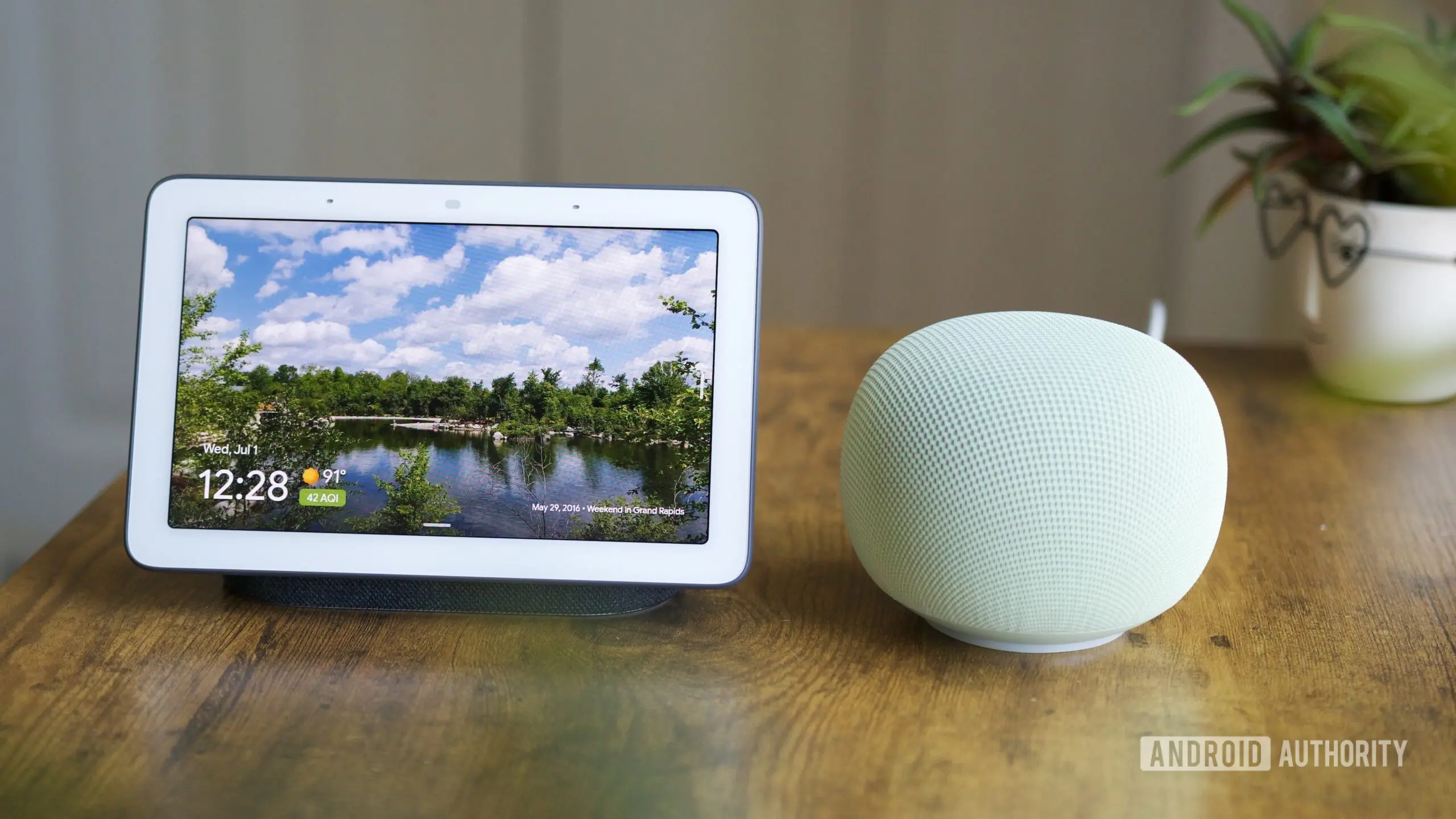
Google is actively working on a fix for a frustrating bug that has broken the Broadcast feature on Google Home devices when using the Gemini assistant. The issue, which has been reported by multiple users on Reddit, causes Gemini to treat spoken broadcast commands as regular conversational prompts rather than sending announcements to all connected speakers and displays around the home.
According to a detailed Reddit post, the user noticed that for several days, saying commands like “Time for dinner” would no longer broadcast the message to other Google Home devices. Instead, Gemini would reply with a conversational response such as “I don’t eat.” Similarly, saying “It’s time to go” prompted Gemini to answer with something like, “Oh, ok, let’s cancel that for now, then,” rather than broadcasting the departure message to the household.
The user stated that the Broadcast feature is their family’s most-used Google Home function, making the bug particularly disruptive. The problem appears to have emerged after Google began integrating its Gemini AI into the Google Home ecosystem, replacing the older Google Assistant for certain interactions. This integration, announced earlier this year, was intended to bring more natural language understanding and richer responses to smart home commands, but it has also introduced unexpected compatibility issues.
Fortunately, Google responded quickly to the complaint on Reddit. A company representative said: “Hey, thanks for the feedback. We are actively working on a fix for this and will circle back once it starts to roll out. We appreciate your patience.” This proactive acknowledgment is part of a broader trend in which Google has been more responsive to user feedback regarding its smart home products in recent months.
Background on the Broadcast Feature
Google Home’s Broadcast feature has been a staple since the early days of the platform. It allows users to send spoken messages—like “Time for dinner” or “I’m leaving now”—to all Google Home speakers and displays in the same home. The feature is especially popular among families, roommates, and multi-room households where quick communication across rooms is useful without needing to shout or text.
The Broadcast command works by capturing the user’s speech and instantly playing it back on every linked device in the home. For years, this was handled seamlessly by the Google Assistant. However, with the gradual rollout of Gemini as the underlying AI for smart home routines and queries, the processing pipeline has changed. Gemini is designed to generate more context-aware and conversational responses, which is beneficial for many tasks but appears to be misinterpreting broadcast requests as personal questions or statements directed at the assistant itself.
The bug essentially means that Gemini fails to recognize that a Broadcast command is a request to relay a message, not to engage in a dialogue. This is a regression from the previous Assistant behavior, which clearly distinguished between a broadcast and a standard query. The issue is compounded by the fact that many users rely on Broadcast for daily routines, and the sudden change has caused confusion and frustration.
How Gemini Integration Changed the Smart Home Experience
Google’s decision to integrate Gemini into Google Home was part of a larger strategy to unify its AI offerings. Gemini, first introduced in late 2023, is Google’s most advanced multimodal AI model, capable of understanding text, images, audio, video, and code. When applied to smart home devices, Gemini was promised to deliver more natural interactions, such as understanding context from previous commands and handling complex multi-step requests.
However, the transition has not been seamless. Users have reported various oddities: Gemini sometimes fails to execute simple commands, misinterprets accents, or responds with overly verbose answers when a simple confirmation was expected. The Broadcast bug is one of the most visible examples of a core feature being broken. It highlights the challenges of replacing a mature, well-tuned assistant with a more advanced but less specialized model.
“It feels like we’ve taken a step backward,” one user commented on the Reddit thread. “The old Assistant handled Broadcast perfectly for years. Why fix what wasn’t broken?” This sentiment echoes broader concerns among early adopters of AI-powered smart home devices, who often value reliability over novelty. Google’s challenge is to ensure that Gemini’s capabilities enhance, rather than disrupt, established user workflows.
Google’s Recent Proactive Approach to Bug Fixes
Over the past few months, Google has shown a renewed focus on addressing user complaints about Google Home. In May 2026, the company quickly fixed a setup bug that prevented some new users from completing the initial configuration of Google Home speakers. That issue was widely reported on forums and social media, and Google pushed an update within days. Similarly, in March 2026, Google resolved an audio sync problem that caused delays between video and sound on Nest Hub devices.
This shift in responsiveness may be tied to increased competition in the smart home market. Amazon’s Alexa has maintained a strong presence, while Apple’s HomePod continues to gain users through tight integration with the Apple ecosystem. Additionally, the rise of open-source smart home platforms like Home Assistant has given tech-savvy users alternatives. To retain its user base, Google appears to be prioritizing quality assurance and rapid response to critical bugs.
The Broadcast bug is particularly high-profile because it affects a core communication feature that many households rely on daily. Google’s swift acknowledgment is a good sign, but users are waiting for the actual fix to roll out. The company has not provided a specific timeline, but based on recent patterns, an update could be released within one to two weeks.
What the Bug Teaches Us About AI Integration
The Gemini Broadcast bug serves as a cautionary tale about the pitfalls of transitioning from rule-based assistants to large language models (LLMs) in consumer products. Rule-based systems, like the original Google Assistant, rely on explicit intent recognition: when a user says “Broadcast [message],” the system triggers a specific action. LLMs, on the other hand, generate responses based on probability and context, which can lead to unexpected behavior when training data does not perfectly map to the desired action.
Google is likely fine-tuning Gemini to recognize broadcast commands as system-level actions rather than conversational inputs. This may involve adding explicit rules or retraining the model with more examples of broadcast scenarios. The process is delicate: too many rules could negate the advantages of using an LLM, while too few rules risk further breakdowns.
For now, users who rely on Broadcast can temporarily use workarounds, such as creating custom routines that mimic the broadcast behavior. For example, a routine triggered by a specific phrase can be set to read a message aloud on all devices. However, this is not a perfect substitute, as routines require prior setup and lack the spontaneity of the original Broadcast command.
Google has not disclosed whether the fix will involve only software updates or if a change to Gemini’s model weights is required. Given the complexity, the fix may be server-side, meaning users won’t need to manually update their devices. The company’s promise to “circle back” suggests that once the fix is tested, Google will announce it via its official channels and likely update the Reddit thread.
Broader Implications for Smart Home AI
This incident highlights a fundamental tension in the smart home industry: the push for more intelligent, conversational AI versus the need for predictable, task-oriented behavior. Users expect their smart home assistants to perform specific functions with precision, not to engage in creative conversations. While Gemini’s conversational abilities are impressive in many contexts, they are counterproductive when applied to straightforward commands like broadcasting a message.
Google is not alone in encountering these issues. Amazon’s integration of a new AI model into Alexa has also produced occasional missteps, such as misunderstanding simple timers or music requests. Apple’s Siri, while less advanced, has maintained consistency because it relies on a more limited set of capabilities. The lesson for all companies is that AI enhancements must be carefully scoped and tested against the most common user scenarios before broad deployment.
For Google, the Broadcast bug is a relatively minor but telling setback. It shows that even well-planned AI rollouts can hit snags, and that user trust must be rebuilt when familiar features break. The company’s quick response is commendable, but the ultimate test will be how smoothly and completely the fix resolves the issue. As Gemini becomes more deeply embedded in Google Home, similar challenges are likely to arise, and Google must prove it can handle them without disrupting the user experience.
In the meantime, users affected by the bug can follow the Reddit thread for updates or contact Google support directly. The community has also suggested that using the old Assistant via the Google Home app’s settings might restore Broadcast functionality for some users, though this is not an official solution. Google has not commented on whether a temporary rollback to the older assistant is possible.
The Broadcast bug is a clear reminder that smart home technology is still evolving rapidly. As AI models become more sophisticated, the line between helpful assistant and garrulous friend will need to be carefully managed. For now, Google is working on ensuring that Gemini can handle one of the most beloved features of Google Home without getting lost in conversation.
Source:Android Authority News