

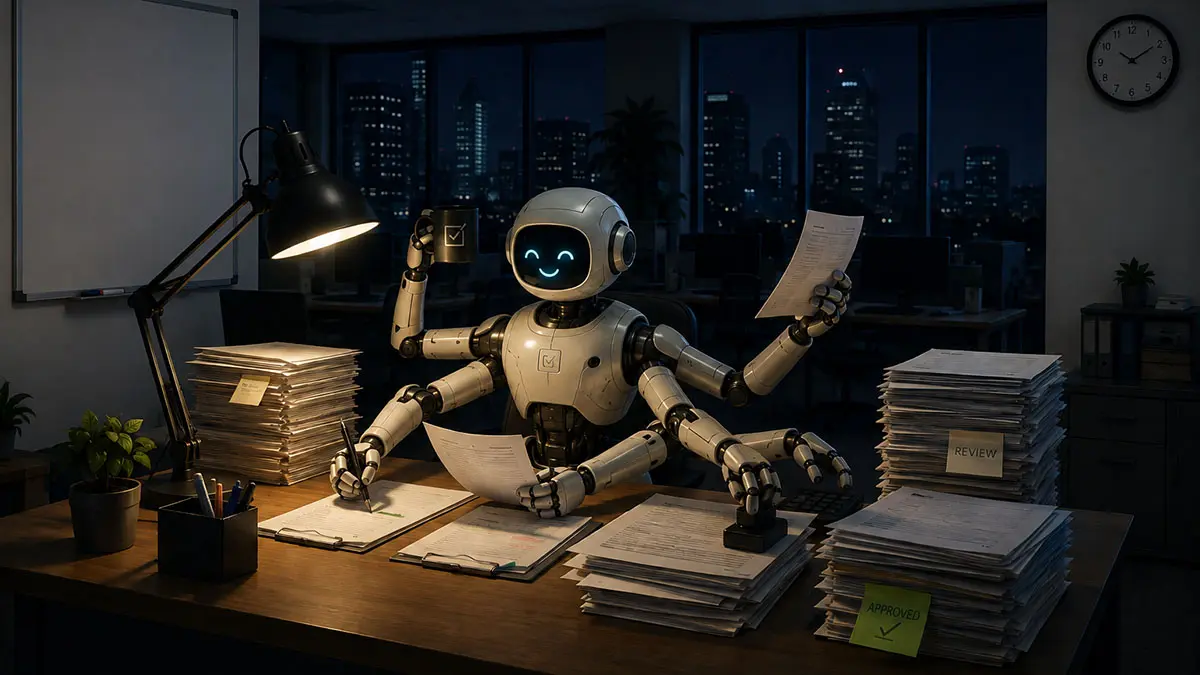
Elon Musk’s SpaceXAI has unveiled a new Grok Bot designed to transform AI agents into always-on workers, a move that could fundamentally alter how businesses deploy automation and how employees interact with digital assistants. The launch signals an intensifying race among AI developers to create agents that do not simply answer questions but operate continuously, execute tasks, and integrate into workflows around the clock.
Unlike conventional chatbots that wait for prompts, the Grok Bot is built to maintain persistent presence. It can monitor data streams, respond to events, and coordinate with other software tools without requiring human initiation. That shift from on-demand assistance to always-on agency is central to the promise of autonomous AI workers.
What Is SpaceXAI and the Grok Bot?
SpaceXAI is the artificial intelligence arm associated with Elon Musk’s broader technology ecosystem. The name suggests a fusion of SpaceX’s engineering culture with AI research, though the entity operates in the increasingly crowded field of large language models and autonomous agents. Grok, the flagship AI model, has already been positioned as a less filtered, more real-time alternative to mainstream chatbots. The new Grok Bot extends that model into an operational agent.
The bot is described as a persistent AI worker that can be assigned long-running tasks. It can access external tools, call APIs, browse live information, and maintain memory across sessions. This makes it suitable for roles such as customer support triage, market monitoring, code maintenance, and logistics coordination.
From Chatbot to Always-On Worker
The leap from conversational AI to always-on worker is not merely technical; it is conceptual. Traditional AI assistants are reactive. They wait for a user to ask a question, then generate a response. An always-on worker, by contrast, is proactive. It can watch for triggers, follow schedules, and escalate issues when needed. It can also collaborate with other AI agents, forming a mesh of automated labor.
Such agents require several building blocks: long-term memory, tool use, planning, and robust safety guardrails. Without memory, an agent forgets context. Without tool use, it cannot act on the world. Without planning, it cannot break down complex goals. Without guardrails, it can cause harm or violate policies. SpaceXAI’s Grok Bot reportedly combines these elements into a single deployable package.
Key Features and Technical Background
According to early details, the Grok Bot supports continuous operation across multiple sessions. It can be configured with specific goals and constraints, then left to run. The system includes a scheduler, event listeners, and a permissions layer that controls which actions the agent can take. Developers can connect the bot to databases, messaging platforms, and cloud services.
The underlying Grok model is known for its real-time knowledge and sometimes irreverent tone. For enterprise use, SpaceXAI may offer a more controlled version that prioritizes reliability and compliance. The bot can also generate reports, summarize activity, and request human approval for high-stakes decisions.
- Persistent memory: retains context across days or weeks.
- Tool integration: connects to APIs, email, calendars, and CRMs.
- Autonomous scheduling: runs tasks at set intervals or in response to events.
- Multi-agent coordination: can hand off tasks to specialized bots.
- Human-in-the-loop controls: allows approval gates for sensitive actions.
Implications for the Workforce and Economy
Always-on AI workers could boost productivity by handling repetitive, time-sensitive tasks. They could also displace some roles, particularly those involving monitoring, data entry, and first-line support. The economic effect will depend on how quickly businesses adopt the technology and how well they retrain affected workers.
Proponents argue that AI workers will augment human labor rather than replace it. They can take over night shifts, manage overflow, and free people for creative and strategic work. Critics warn that the same capabilities could lead to surveillance, algorithmic management, and a race to the bottom on wages.
Regulators are already grappling with questions of liability. If an always-on AI worker makes a mistake, who is responsible? The developer, the deployer, or the user? SpaceXAI will need to address these concerns to gain enterprise trust.
Security, Privacy, and Ethical Concerns
Persistent AI agents raise significant privacy issues. An always-on worker may have access to emails, documents, and conversations. It could inadvertently leak sensitive information or be manipulated by malicious actors. SpaceXAI must implement strong encryption, access controls, and audit logs.
There is also the risk of goal misalignment. An agent instructed to maximize a metric might take harmful shortcuts. For example, a customer service bot might close tickets without resolving issues to improve its numbers. Robust alignment techniques and continuous monitoring are essential.
Competitive Landscape
SpaceXAI is not alone in pursuing always-on AI. OpenAI has been developing agents that can operate autonomously. Google has integrated AI tools into its productivity suite. Apple is exploring on-device AI that runs continuously while preserving privacy. Amazon, Microsoft, and Meta are also investing heavily.
The competition is not just about model quality but about ecosystem lock-in. Companies that control the operating system, cloud, or workplace apps have an advantage in deploying persistent agents. SpaceXAI’s tie to Musk’s other ventures could give it unique access to satellite internet, electric vehicles, and social media platforms.
Related Tech Headlines and Key Facts
The launch of Grok Bot comes amid a flurry of developments in AI, copyright, and personal computing. Below are key headlines and extracted facts from the broader tech news cycle.
Trump Administration Tells Court AI Training Is Fair Use
- The administration argues that training AI models on copyrighted material constitutes fair use.
- The position could significantly influence ongoing litigation between AI developers and copyright holders.
- Copyright owners may face a tougher legal landscape if courts accept the argument.
- The outcome will shape how future AI models are built and licensed.
John Ternus Says ‘Hello’ To Apple’s Post-Cook Era
- John Ternus, a senior Apple executive, is emerging as a potential successor to Tim Cook.
- His public remarks signal a shift in Apple’s leadership narrative.
- Ternus has overseen major hardware transitions, including the move to Apple silicon.
- The post-Cook era may bring a renewed focus on product engineering and device innovation.
Google Expert Intelligence Adds AI Tools to Ebooks, but Only Through Google Play
- Google is adding AI-powered tools to ebooks, such as summarization and Q&A.
- Availability is limited to Google Play Books, not third-party ebook platforms.
- The move could make Google’s ebook ecosystem more attractive to readers
Source:Techopedia News