

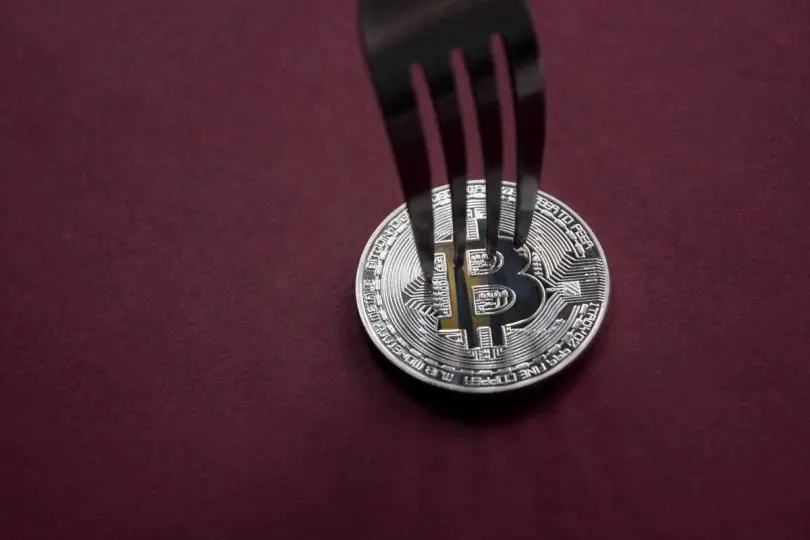
Bitcoin's BIP 110 proposal, a controversial attempt to cap the amount of non-financial data that can be stored on the blockchain, is approaching a critical fork deadline in early August. Despite months of discussion and advocacy from a small group of developers and miners, support for the soft fork has failed to gain traction. According to the latest metrics, miner signaling for BIP-110 remains below 1%, and node adoption sits in the low single digits. The proposal would tighten limits on OP_RETURN outputs and other data-carrying methods for a period of one year, aiming to refocus Bitcoin on its original purpose as a peer-to-peer electronic cash system.
The Mechanics of BIP-110
BIP-110, originally drafted by a pseudonymous developer, seeks to reduce the maximum allowable data in standard transactions. Specifically, it would lower the OP_RETURN limit from 80 bytes to 40 bytes and restrict the use of other data-embedding techniques such as Taproot scripts and witness data. The rationale, as stated by proponents, is that Bitcoin's blockchain should primarily serve financial transactions, not act as a decentralized storage layer for arbitrary content like messages, images, or application data. They argue that the rise of Ordinals, BRC-20 tokens, and other data-heavy protocols has bloated the blockchain, leading to higher fees and slower confirmation times for ordinary users. The temporary one-year cap is intended to give the community time to develop alternative off-chain solutions for data storage.
Miner Support: Almost Nonexistent
The fork requires a supermajority of miners to signal readiness by a certain block height, but current data shows that only a handful of small mining pools have publicly endorsed BIP-110. Major pools like Foundry USA, Antpool, and F2Pool have remained silent or expressed opposition. This lack of support is not surprising given the economic incentives at play. Miners earn fees from all transactions, including those that embed data. In recent months, Ordinals and BRC-20 activity has accounted for a significant portion of transaction fees, sometimes reaching 20% of total block revenue. Capping that activity would directly reduce miner income, making the proposal economically unattractive. Furthermore, many miners view BIP-110 as a governance overreach that could set a dangerous precedent for censorship on the network.
Opposition from Industry Leaders
Prominent figures in the Bitcoin ecosystem have publicly come out against BIP-110. Michael Saylor, executive chairman of MicroStrategy, warned that turning a spam dispute into a consensus fight could create a bigger risk than the spam itself. He argued that any soft fork that restricts valid, fee-paying transactions—regardless of their purpose—undermines Bitcoin's permissionless nature. Adam Back, CEO of Blockstream and a co-inventor of Bitcoin's proof-of-work, echoed this sentiment, stating that the market should decide what constitutes spam, not a central committee. Other notable opponents include developers affiliated with the Bitcoin Core project, who insist that the proposal lacks sufficient technical review and community consensus. The debate has reignited old divisions between 'small blockers' and 'big blockers,' reminiscent of the 2017 Bitcoin Cash split, but with the added complexity of data-heavy protocols like Ordinals.
Historical Context: From Block Size Wars to Data Caps
Bitcoin's scaling debate is nothing new. The 2017 block size war resulted in a fork that created Bitcoin Cash (BCH) and Bitcoin SV (BSV), both of which increased block size to accommodate more transactions. BIP-110 is in many ways a reversal of that trend: instead of expanding capacity, it seeks to restrict a specific type of data. However, the technical context has changed. With SegWit and Taproot, Bitcoin can now handle more data per block than ever before, but the nature of that data has shifted from simple metadata to full-fledged token protocols. The Ordinals protocol, launched in 2022, allows users to inscribe arbitrary data onto satoshis, effectively creating non-fungible tokens (NFTs) on Bitcoin. This innovation has been both celebrated and criticized. Supporters see it as a natural evolution of Bitcoin's capabilities; detractors argue it introduces network congestion and degrades the user experience for payments.
Potential Outcomes: A Minority Chain or Nothing
Given the negligible miner and node support, analysts predict that BIP-110 will not achieve the required threshold, leading to one of two scenarios. The most likely outcome is that the soft fork fails to activate altogether, leaving the Bitcoin protocol unchanged. Alternatively, a small group of miners and node operators could choose to enforce the new rules on their own, creating a minority chain that would be quickly orphaned by the majority hashing power. Such a scenario would be reminiscent of the short-lived SegWit2x attempt in 2017, which was abandoned after failing to gain consensus. Even if BIP-110 were to activate on a minority chain, it would lack the security of the main network and would likely be dismissed as an altcoin. The risks of a contentious fork are not lost on the community: any split, even a small one, can create confusion, exchange delistings, and reputational damage for Bitcoin.
Broader Market Implications
While the fork itself appears unlikely to succeed, the debate surrounding BIP-110 has broader implications for Bitcoin governance. It highlights the tension between those who view Bitcoin strictly as a monetary network and those who embrace its programmability. The rise of Layer 2 solutions, such as the Lightning Network and sidechains like Rootstock (RSK), further complicates the picture. Proponents of BIP-110 argue that off-chain solutions are better suited for non-financial data, but critics counter that restricting on-chain data would stifle innovation and push activity to more permissioned platforms. Meanwhile, the price of bitcoin has remained relatively stable amid the debate, suggesting that markets are not pricing in a significant disruption. However, if miner support were to suddenly surge—perhaps due to a coordinated campaign—the situation could change rapidly. For now, the clock is ticking, and the data suggests BIP-110 will expire without a notable impact.
The upcoming deadline serves as a reminder of Bitcoin's decentralized nature: no single entity can force a change without broad consensus. As August approaches, all eyes remain on hashrate distribution and node signaling, but based on current trends, the BIP 110 proposal is headed for a quiet defeat. Whether this is a victory for pragmatism or a missed opportunity depends on one's perspective, but the underlying issues of data usage and network scalability will undoubtedly resurface in future governance debates.
Source:Coindesk News