

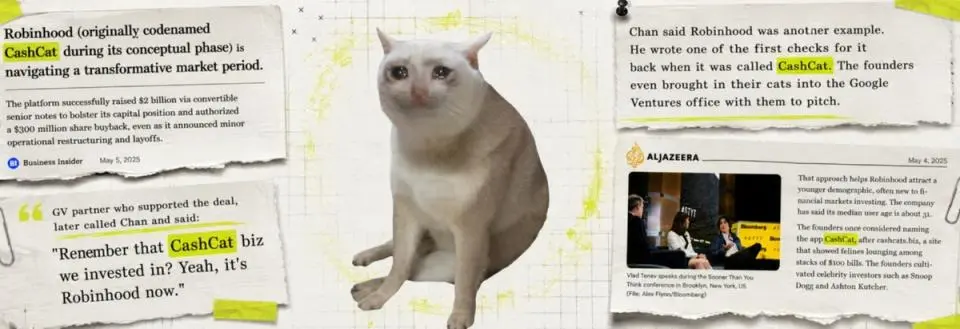
A trader has transformed a mere $800 into more than $1 million by speculating on a memecoin launched on Robinhood’s brand-new blockchain, a platform built on Arbitrum technology that went live on July 1. The token, dubbed CASHCAT, is a feline-themed memecoin named after the company’s former mascot—a cat logo that Robinhood phased out years ago. Within days, CASHCAT reached a market value of approximately $105 million, creating spectacular windfalls for early investors who got in at the very beginning.
The story of this trader is emblematic of the high-risk, high-reward nature of memecoin trading. According to on-chain data, the five most profitable wallets collectively realized roughly $3.7 million in gains, with the top earner turning that initial $800 stake into over $1 million. These early buyers were able to purchase CASHCAT at fractions of a cent before the token’s price exploded. However, for every early winner, thousands of later traders have served as exit liquidity, buying tokens at inflated prices only to see sharp declines. The token trades on thin liquidity and experiences extreme price swings, a pattern typical of memecoins that often lack fundamental value.
Robinhood’s Blockchain Ambitions
Robinhood’s entrance into the blockchain space marks a significant strategic shift for the company. The new chain, built on Arbitrum’s Orbit technology, is designed to move stocks and other assets on-chain, enabling tokenized real-world assets (RWAs) such as equities, bonds, and commodities. The company has positioned this infrastructure as a way to modernize financial markets, reduce settlement times, and increase transparency. However, the immediate breakout hit on the chain being a memecoin—rather than a serious tokenized asset—underscores the speculative frenzy that often accompanies new blockchain launches.
The choice of Arbitrum is notable. Arbitrum is a leading layer-2 scaling solution for Ethereum, known for its low fees and fast transactions. By building on Arbitrum, Robinhood gains access to Ethereum’s security while offering users a cheaper and more efficient trading environment. The chain launched with a suite of features including native token swaps, bridging, and support for decentralized applications. Yet, within the first week, it was memecoin trading that dominated activity, generating both excitement and concern among observers.
The CASHCAT Phenomenon
CASHCAT is not just any memecoin. Its branding directly references the iconic cat logo that Robinhood used in its early days—a cartoonish feline that the company later replaced with a more professional bird emblem. This nostalgic connection resonated with a segment of the crypto community, sparking viral marketing and social media buzz. Within hours of its launch, the token was being traded heavily on decentralized exchanges, with liquidity pools quickly filling and prices skyrocketing.
The token’s rapid rise illustrates the power of community-driven speculation. Memecoins like Dogecoin and Shiba Inu have shown that a strong narrative and dedicated following can propel assets to multi-billion-dollar valuations, even in the absence of utility. CASHCAT appears to be following a similar trajectory, albeit on a smaller scale. However, the lack of fundamental value means that prices are highly susceptible to market sentiment and manipulative trading strategies. Whales—large holders—can dump their tokens at any moment, causing catastrophic losses for smaller investors.
Risks and Realities of Memecoin Investing
The story of the trader who turned $800 into $1 million is compelling, but it is important to recognize the extreme risks involved. According to blockchain analytics, the majority of CASHCAT traders have lost money. The token’s price has already experienced multiple flash crashes, with drops of 50% or more occurring within minutes. Thin liquidity means that even modest sell orders can move the price significantly, creating a volatile and unpredictable trading environment.
Moreover, memecoins are often targets for rug pulls and scams. In a rug pull, developers or early insiders drain liquidity pools, leaving retail investors holding worthless tokens. While there is no evidence that CASHCAT is a scam, the lack of transparency around its creation and ownership raises red flags. The token’s smart contract has not been audited by a reputable firm, and the team behind it remains anonymous—a common trait among memecoin projects.
Regulatory scrutiny is another concern. The U.S. Securities and Exchange Commission (SEC) has increasingly targeted cryptocurrencies that it deems securities. While memecoins have generally been classified as commodities or collectibles, the line is blurry, and enforcement actions are unpredictable. Should regulators decide that CASHCAT or similar tokens are securities, the consequences could be severe for both issuers and traders.
Implications for Robinhood’s Blockchain Strategy
For Robinhood, the CASHCAT phenomenon is a double-edged sword. On one hand, it demonstrates that the new chain can attract attention and trading volume quickly. The buzz generated by the memecoin may drive new users to the platform, boosting adoption of Robinhood’s crypto services. On the other hand, the speculative nature of memecoin trading could undermine the company’s messaging that its blockchain is serious infrastructure for tokenized assets. Robinhood has been promoting the chain as a venue for stocks, bonds, and other RWAs, not for volatile meme tokens that have no intrinsic value.
The company has not officially commented on CASHCAT, but its actions suggest a cautious approach. Robinhood’s crypto wallet supports self-custody, meaning that users can trade any token deployed on the chain, including memecoins. The platform does not list or endorse specific tokens, but it provides the rails for trading. This hands-off strategy allows Robinhood to benefit from activity while distancing itself from any potential liabilities. However, if memecoins dominate activity on the chain, it could hurt the brand’s reputation among institutional investors who might otherwise consider using the platform for RWA tokenization.
Broader Context: The State of Memecoin Mania
CASHCAT is part of a larger trend that has swept the crypto market in 2025 and 2026. Memecoins have become one of the most popular—and most criticized—sectors in the space. From Dogecoin to Pepe, these tokens have produced extraordinary returns for early adopters while leaving many later investors with heavy losses. The rise of platforms like Pump.fun, which allows users to create and launch memecoins in minutes, has only accelerated the phenomenon. According to data from CoinGecko, the total market capitalization of memecoins now exceeds $60 billion, accounting for a significant share of all crypto trading volume.
This trend has drawn criticism from regulators and market observers who argue that memecoins are little more than gambling vehicles with no real-world use. Proponents counter that they are a form of entertainment and social expression, akin to trading baseball cards or digital art. Nevertheless, the volatility and lack of oversight make them risky investments, especially for retail traders who may be lured by stories of overnight riches.
What’s Next for Robinhood’s Blockchain
Looking ahead, the success of Robinhood’s blockchain will depend on its ability to attract legitimate, asset-backed projects. Several companies have already announced plans to tokenize stocks and ETFs on the platform, including real estate investment trusts and commodities. If these efforts gain traction, the chain could become a key piece of infrastructure for the tokenized economy. However, the immediate popularity of memecoins suggests that the chain will have to navigate a difficult balancing act between fostering innovation and controlling speculative excess.
The trader who turned $800 into $1 million on CASHCAT may be celebrated as a lucky winner, but for every such story, there are many more who have lost everything. As Robinhood continues to build out its blockchain ecosystem, it must consider the lessons of the memecoin mania: that easy money attracts both geniuses and fools, and that sustainable growth requires more than just viral tokens. The company’s long-term vision for onchain finance is ambitious, but the reality of human behavior may keep memecoins at the center of the action for the foreseeable future.
Source:Coindesk News