

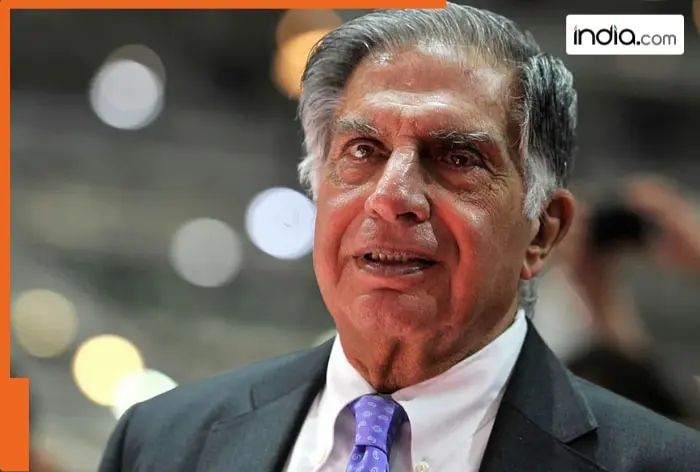
Ratan Tata, the legendary industrialist and former chairman of the Tata Group, passed away on October 9, 2024, leaving behind a legacy of integrity, philanthropy, and business acumen. Among the many stories that define his remarkable life, one stands out as a testament to his resilience and strategic foresight — the so-called “revenge story” involving Ford Motors. It is a tale of how a moment of humiliation in the 1990s eventually led to one of the most iconic acquisitions in automotive history.
The Setting: Tata Motors and the Indica Venture
In the late 1990s, Ratan Tata was spearheading the expansion of the Tata Group into passenger cars. The launch of the Tata Indica in 1998 marked the company’s entry into the passenger vehicle segment. The car was competitively priced and featured a design that appealed to Indian consumers. However, despite a grand launch, the Indica struggled to gain traction in the market. Sales were sluggish, and the venture incurred heavy losses. The situation grew so dire that Tata considered selling the passenger car division to cut losses.
The company entered into discussions with several global automakers, including Ford Motors. At that time, Ford was a dominant player in the global automotive industry, and its chairman, Bill Ford, wielded significant influence. Ratan Tata personally traveled to the United States to negotiate a potential sale of Tata Motors’ passenger car business.
The Insult That Sparked a Revolution
During a critical meeting in Detroit, Bill Ford reportedly mocked Ratan Tata’s ambitions in the automotive sector. According to accounts, Ford said, “If you don’t know anything about this business, then why did you start the passenger car division?” He went further, adding dismissively, “If we buy this business of yours, it will be a favor to us.” The words stung. Tata was publicly humiliated in front of his own team.
Instead of collapsing under the insult, Ratan Tata made a quiet but firm decision. He called off the sale negotiations and returned to India with a renewed sense of purpose. The humiliation became the fuel for one of the most remarkable turnarounds in corporate history.
The Silent Comeback: Rebuilding Tata Motors
Upon returning to India, Ratan Tata shelved all plans to sell the passenger car division. He focused entirely on reviving Tata Motors. The company invested heavily in research and development, improved product quality, expanded its dealership network, and refined its marketing strategies. Over the next few years, Tata Motors launched successful models that captured the imagination of Indian consumers. The Indica eventually became a best-seller, and the company gained a strong foothold in the domestic market.
But Tata did not stop there. Under his leadership, Tata Motors expanded globally, entering emerging markets and forming strategic alliances. By the mid-2000s, the company had established itself as a serious player in the automotive industry. Its engineering capabilities and cost-efficient manufacturing made it a formidable competitor.
The Strategic Masterstroke: Buying Jaguar and Land Rover
By 2008, the tables had turned dramatically. Ford Motors was facing severe financial difficulties in the wake of the global financial crisis. The American giant was struggling with declining sales, mounting debts, and the need to streamline its portfolio. Ford decided to sell its luxury brands — Jaguar and Land Rover (JLR) — to raise cash.
Ratan Tata saw an opportunity. He initiated talks with Ford to acquire both brands. When the two chairmen met again, the atmosphere was entirely different. Bill Ford, now humbled by his company’s predicament, expressed genuine gratitude. He reportedly said, “You are doing us a huge favor by buying Jaguar-Land Rover (JLR).” In a full-circle moment, the same man who had insulted Tata years earlier was now thanking him.
The acquisition was completed in 2008 for $2.3 billion. It was a landmark deal that gave Tata Motors access to world-class engineering, iconic brands, and a global distribution network. The purchase transformed Tata Motors into a multinational automotive powerhouse.
The Impact of the Acquisition
The acquisition of JLR was a game-changer for Tata Motors. Under Tata’s stewardship, JLR underwent a renaissance. New models, such as the Range Rover Evoque and Jaguar F-Pace, were introduced. Sales soared, and the brands regained their prestige and profitability. JLR became a major contributor to Tata Motors’ revenue and global reputation.
The success of the acquisition also cemented Ratan Tata’s reputation as a visionary leader who could turn adversity into opportunity. The story of the insult and subsequent acquisition became a case study in business schools around the world. It demonstrated the power of patience, humility, and strategic thinking.
Legacy of Resilience and Humility
Ratan Tata was never one to dwell on revenge. In interviews, he rarely mentioned the incident, preferring to focus on the positive outcomes. He often credited his team for the success of Tata Motors and JLR. His leadership style was defined by soft-spoken yet unwavering determination.
Beyond the automotive world, Ratan Tata was a philanthropist who dedicated much of his wealth to social causes through the Tata Trusts. He was known for his ethical business practices, his support for innovation, and his humble demeanor. The story of his encounter with Bill Ford is often cited as an example of how to respond to failure and criticism with grace and eventual triumph.
Broader Lessons for Business and Life
The tale of Ratan Tata’s comeback offers several important lessons. First, it underscores the importance of resilience. Setbacks are inevitable, but how one responds defines the outcome. Second, it highlights the value of long-term vision. Tata did not seek immediate revenge; instead, he focused on building a stronger company. Third, it demonstrates that success is the best response to doubters. By turning Tata Motors into a global force, Tata proved that the initial insult was misplaced.
The story also illustrates the cyclical nature of business. Ford, once a dominant force, found itself in trouble, while Tata Motors, once struggling, rose to acquire Ford’s prized assets. This serves as a reminder that no company is invincible, and that humility in success and persistence in failure are essential virtues.
Ratan Tata’s Broader Contributions
Ratan Tata’s influence extended far beyond the automotive sector. Under his leadership, the Tata Group expanded into information technology (Tata Consultancy Services became a global IT giant), steel, hospitality, and consumer goods. He oversaw the acquisitions of Corus Group (steel), Tetley (tea), and other international companies, transforming the Tata Group into a truly global conglomerate.
He was also a pioneer in promoting innovation. He launched the Tata Nano, the world’s most affordable car, aimed at providing safe transportation for millions of Indian families. Although the Nano did not achieve commercial success, it demonstrated his willingness to challenge conventions and think audaciously.
The Personal Side of Ratan Tata
Despite his immense success, Ratan Tata remained grounded. He was known for his simple lifestyle, his love for dogs, and his accessibility to employees and ordinary people. He shunned the trappings of wealth and fame, choosing instead to focus on making a difference. His humility and integrity won him admirers across the world.
In his later years, he became a mentor to young entrepreneurs and a vocal advocate for social causes, including education, healthcare, and rural development. His commitment to ethical capitalism and corporate social responsibility set a benchmark for generations of business leaders.
The story of the insult at Ford and the subsequent acquisition of Jaguar and Land Rover is just one chapter in a life filled with remarkable achievements. It encapsulates his philosophy: never retaliate with anger, but let success be the ultimate revenge.