

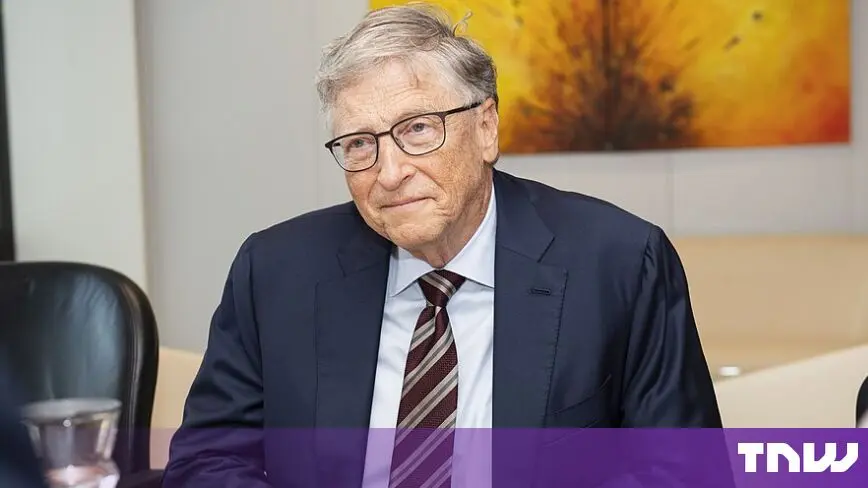
Bill Gates has published a memo proposing a tax on AI, a category of jobs reserved for humans, and new institutions to manage the transition. In an interview with GeekWire, he said that industry leaders are worried privately while staying quiet publicly. His comments come as governments around the world struggle to regulate artificial intelligence at a pace that matches its development.
Gates said the people building AI are worried in private and quiet in public. “I know they’re all worried. Or all of them that I know, which is basically everybody but Elon,” he told GeekWire, referring to Elon Musk. His memo argues that the industry is crossing the safety lines it set for itself, and that nobody is preparing for what follows. It is a striking statement from one of the most influential figures in technology, a man who co-founded Microsoft and spent decades shaping the digital economy.
A proposal that repeats history
Gates first proposed taxing robots in February 2017. At that time, the debate was about factory automation and the displacement of manufacturing jobs. The reasoning then was similar to what he argues now: if machines replace human workers, the government should capture some of the productivity gains to support displaced people and fund retraining programs. His latest memo updates that argument for the age of large language models and generative AI, but the core idea remains unchanged.
The response from Europe in 2017 was telling. The European Parliament voted 396 to 123, with 85 abstentions, on a set of rules for robotics. The tax was not included in what passed. Instead, the resolution asked the European Commission to examine the viability of member states’ social security systems as robots spread. That request reflected the same concern that had motivated Gates, but lawmakers were not willing to endorse a tax at that moment.
The 2017 resolution also contained an idea that attracted attention then and has since faded: electronic personhood for the most sophisticated autonomous robots. The concept was proposed as a way to assign legal responsibility when robots caused harm or made decisions with economic consequences. It was controversial from the start, with critics arguing that it would let companies evade liability by treating robots as separate legal entities. Nearly a decade later, electronic personhood has gone nowhere in the European Union or anywhere else.
Mady Delvaux, the rapporteur for the 2017 resolution, was openly dissatisfied with the outcome. She said certain coalitions in the Parliament had rejected a forward-looking debate about workers. At the same time, the robotics industry welcomed the result, presumably because it avoided new tax burdens and legal uncertainties. The episode illustrated how difficult it is to craft rules for emerging technologies when both business interests and worker protections are at stake.
Europe’s current approach
Nine years later, the European Union has moved forward with the AI Act, a comprehensive regulation that sets risk-based requirements for AI systems. It requires human oversight for high-risk applications and imposes transparency rules for certain types of AI, such as deepfakes and chatbot systems. But it does not do the two things that Gates has repeatedly recommended.
The AI Act does not tax AI models or companies that deploy them. It also does not reserve a category of work exclusively for humans. No member state has proposed either measure on its own, which suggests that the political appetite for an AI tax remains weak. The European Commission has argued that the AI Act will foster trust and innovation, but critics question whether it can protect jobs without stifling technological progress.
TNW has asked whether the AI Act can adequately address employment concerns. The answer is not straightforward. While the regulation includes provisions for AI literacy and requires companies to report certain incidents, it does not establish a fund for displaced workers or create a legal right to human employment. The gap between the rhetoric of AI safety and the practical machinery of labor policy remains wide.
The evidence base is thinner than either side admits
One of the most challenging aspects of the AI jobs debate is the lack of solid evidence. Headline numbers often claim that millions of jobs will be automated in the next decade, but these projections rely on assumptions that may not hold. TNW has argued that what AI is doing to jobs in Europe looks different from the headline numbers. Some sectors are experiencing slow adoption, while others are seeing rapid change. The impacts vary by country, industry, and worker skill level.
Gates’ call for new institutions to manage the transition acknowledges that current systems may not be equipped to handle the scale of change. He has suggested that governments need dedicated agencies to monitor AI developments, coordinate responses, and ensure that the benefits of AI are widely shared. These ideas are not entirely new. Economists and labor scholars have proposed similar mechanisms for years, but they have rarely been implemented.
The lack of preparation is not limited to governments. Companies are also uncertain about how to respond. Many are experimenting with generative AI tools in their workflows, but few have developed clear policies on when to replace human workers and when to augment them. The private worry that Gates describes may stem from this uncertainty. Executives can see that AI is improving rapidly, but they cannot predict exactly how it will transform their industries or what the public reaction will be.
The role of philanthropy and advocacy
Gates’ involvement in this issue is part of a broader pattern. Through the Bill & Melinda Gates Foundation, he has been active in public health, education, and climate change. His views on technology policy carry weight because of his success at Microsoft and his philanthropy. However, his position is not without contradictions. Microsoft has invested heavily in OpenAI and other AI companies, raising questions about whether Gates is simultaneously promoting the technology and warning about its consequences.
He has acknowledged these tensions in past interviews. He has said that AI is the most important technological advancement in decades, with the potential to improve healthcare, education, and productivity. But he also believes that society must prepare for the disruptions that will accompany these benefits. His latest memo is an attempt to start a conversation that he believes is long overdue.
The reference to being “basically everybody but Elon” is a notable comment. Musk has been vocal about AI risks for years, often predicting catastrophic outcomes if AI is not regulated. Gates’ remark suggests that many other leaders share similar concerns but choose not to express them publicly. This could be because they fear regulatory backlash, investor pressure, or public panic. It could also be because they do not have clear solutions to offer.
Comparing the 2017 and 2025 contexts
The technological landscape in 2025 is very different from 2017. Generative AI models can write essays, produce code, create images, and even assist in scientific research. They are being integrated into customer service, legal analysis, healthcare diagnostics, and software development. The pace of improvement has been so fast that regulatory agencies have struggled to keep up.
But the political dynamics have not shifted as quickly. In 2017, the European Parliament deleted the robot tax from its resolution, opting instead for a softer approach. In 2025, the EU AI Act went into effect with a focus on risk management, not on labor market intervention. The absence of a meaningful debate about AI taxation in national parliaments indicates that the issue remains politically fraught.
Part of the challenge is defining what an AI tax would actually cover. Would it apply to every company that uses AI, or only to those that replace workers? Would it be based on the number of AI models deployed, the revenue generated by AI systems, or the economic value added by automation? Gates has not provided a detailed technical proposal, which leaves the idea open to criticism from both supporters and opponents.
Another question is how the revenue from an AI tax would be used. Gates has suggested that it could fund retraining programs, income support, and perhaps a universal basic income. But designing such programs is difficult. Workers who lose jobs to automation may need different types of assistance depending on their age, location, and skill set. A one-size-fits-all approach is unlikely to work.
What the public wants
Public opinion on AI is mixed. Polls show that most people are concerned about the impact of AI on jobs, but they also see potential benefits in terms of convenience, safety, and productivity. Many believe that AI should be regulated, but there is no consensus on how. The idea of reserving certain jobs for humans is popular among some workers, especially in caregiving, education, and the arts, but it is difficult to enforce in a market economy.
Governments have experimented with small-scale measures. Some cities and states have created AI advisory councils. Others have funded pilot programs for universal basic income. But no major economy has adopted a comprehensive strategy that combines an AI tax, reserved job categories, and new institutions. Gates’ memo is a reminder that this gap between concern and action has persisted for nearly a decade.
The original source of his proposal is not a policy paper from a think tank or an academic study. It is a memo from a billionaire technologist who has seen multiple cycles of technological change. His warning may or may not be accurate, but it adds to the growing pressure on policymakers to move beyond general principles and toward concrete interventions. Whether they will listen is another question. The history of the robot tax suggests that politics often lags behind technology, and that even the most compelling arguments can be defeated by competing interests.