

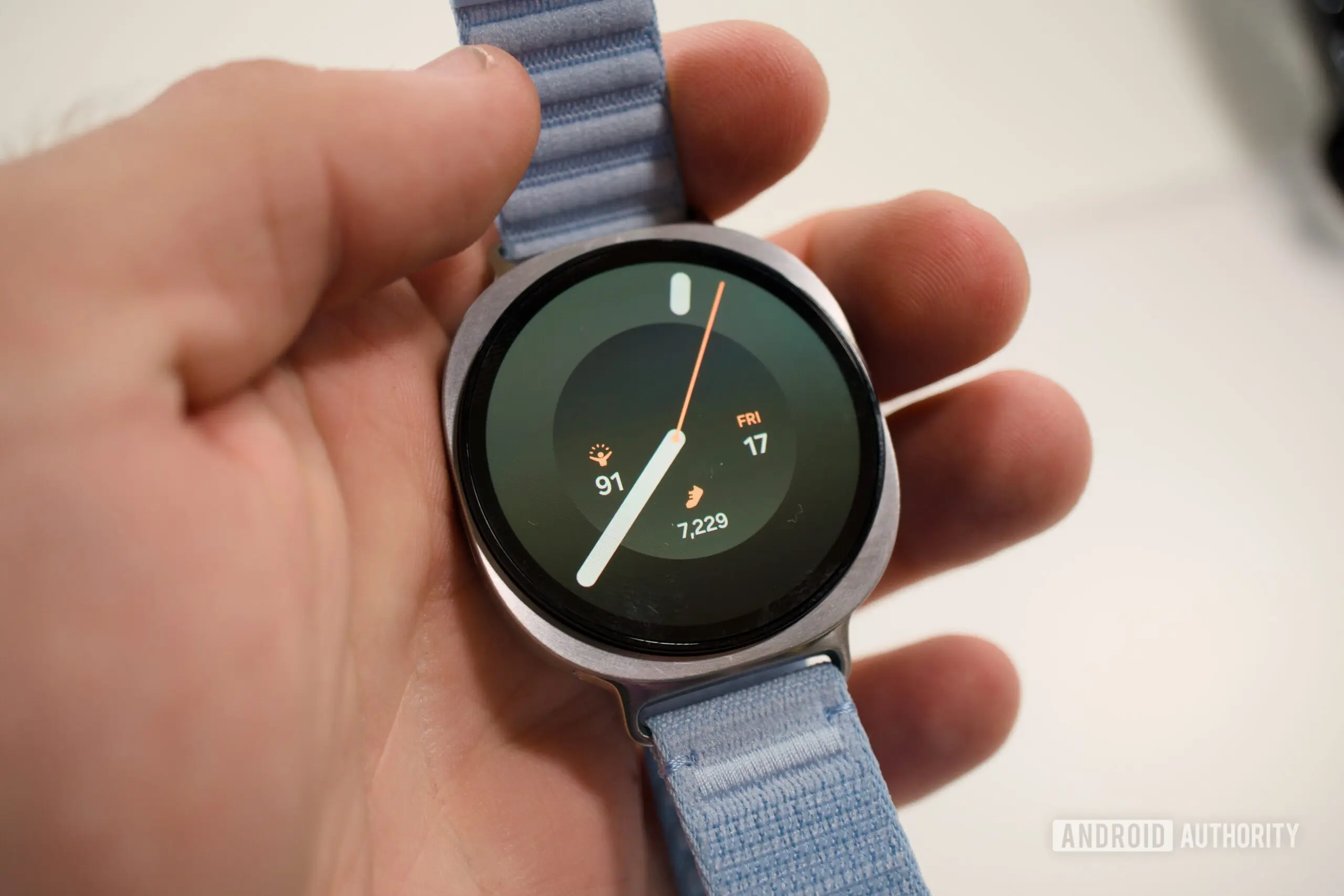
Owners of Samsung's latest smartwatches are reporting charging times that stretch to double or triple the advertised duration, prompting some to point desk fans at their wrist or rest the charging puck on ice just to get normal speeds. Multiple complaints across Reddit and Samsung's community forums suggest the Galaxy Watch 9 and Galaxy Watch Ultra 2 are aggressively throttling charging power when temperatures climb, creating a frustrating experience for early adopters.
Advertised charging times vs reality
Samsung officially rates the 40mm Galaxy Watch 9 at 80 minutes for a full 0-100% charge. The larger 44mm Watch 9 and the Watch Ultra 2 are rated at 90 minutes. These numbers are part of Samsung's marketing push, highlighting improved battery life and faster top-ups compared to earlier models. In practice, however, a number of users are seeing significantly longer charge times.
A 40mm Watch 9 owner posted a detailed timeline showing a full charging cycle taking well over two hours. Another user with a Watch Ultra 2 said the device needed four hours to go from empty to full under normal room conditions. These are not isolated incidents; the same theme appears across multiple threads, with many users noting that the watches charge at a snail's pace even when left untouched during the entire process.
Some users have taken to third-party battery monitoring apps to track exactly what is happening during charging. A Reddit user shared a screenshot showing the watch bouncing between 5.5W and 2.8W over a 30-minute window, never holding the peak rate for more than a few minutes. That kind of fluctuation makes the charging time unpredictable and explains why a device advertised as reaching full in 80 minutes can end up needing several hours.
Thermal throttling: why the charge slows down
So what is going on? The evidence points to aggressive thermal throttling. The watches appear to repeatedly reduce charging power as heat builds up inside the chassis. Users monitoring charging wattage have observed the power draw dropping from the expected 5.5W down to 3.5W or even lower, sometimes within minutes of attaching the charger. Once the temperature falls, the watch may briefly increase power again, but the cycle keeps repeating, extending the total charge time.
Thermal throttling is not a new concept. Smartphones and wearables regularly limit performance or charging speed to protect internal components and the battery from heat damage. Samsung's own software likely includes a temperature threshold that, when crossed, cuts power significantly. The problem here is that the threshold appears to be set too conservatively or is reacting to normal ambient heat, making the feature counterproductive for users who expected a fast charge. In warm rooms or during summer months, the issue becomes even more pronounced, which is why so many owners are looking for external cooling methods.
Samsung's fast charging evolution
Samsung has been improving wearable charging speeds for several generations. Earlier Galaxy Watch models used basic pucks with 5W charging, and users occasionally complained about slow top-ups, but the differences were rarely this dramatic. The Galaxy Watch 7 generation introduced a more efficient charging architecture and longer battery life, but it was the Galaxy Watch 8 and Watch Ultra that began to push 5.5W and above. The Galaxy Watch 9 was supposed to refine that further, yet the reported behavior suggests the thermals are not being managed as well as they should be.
The wearable market has become more competitive, with Google's Pixel Watch series and Apple Watch offering fast charging at various price points. Samsung's premium wearables need to deliver reliable performance, and a charging experience that takes up to four hours undermines the convenience that owners expect from a modern smartwatch. This is likely why the community reaction has been so strong. For a decade, Samsung has positioned its Galaxy Watch line as the go-to Android wearable, but fast charging is now a core feature that consumers compare across brands.
User workarounds: fans, ice, and thermal paste
Desperate times call for desperate measures. Some affected owners have turned to external cooling to keep the charging speed stable. One user reported that pointing a desk fan directly at the watch during charging significantly reduced the total time needed for a full cycle. The airflow helped dissipate heat from both the puck and the watch case, allowing the battery to accept higher wattage for longer periods.
Another user went further, using thermal paste to bond the charging puck to a metal block and then setting that on ice. That extreme setup allegedly maintained full 5.5W charging from start to finish, which strongly supports the thermal throttling theory. While these hacks are clever, nobody should have to go to such lengths to make a flagship product work as advertised. They also carry risks, such as condensation forming on electronic components or moisture seeping into the charging contacts. A few users have reported burned-out pucks, and others have voiced concerns about voiding their warranty with such modifications.
Charger compatibility and handshake problems
The trouble may not be solely about heat. Several reports on the US Samsung Community forum describe backwards compatibility problems with Galaxy Watch 8 chargers and third-party charging docks. When using older accessories, the watch often displays a 'slow charging' alert or outright refuses to draw power. That suggests a firmware handshake issue, where the watch identifies the charger but fails to negotiate the correct power delivery profile.
Oddly, some owners found that plugging into an older Galaxy Watch 6 puck delivered faster results than the included fast-charging cable. The reason is unclear, but it could be that the Watch 6 charger uses an older protocol that the new firmware recognizes more readily. The Watch 8 charger might be sending a newer handshake that the Watch 9 interprets incorrectly leading to a reduced power state. Third-party docks are even more vulnerable, as they often rely on reverse-engineered profiles that may not sync with Samsung's latest implementation. This means even users who are not hitting thermal limits may see slow charging simply because of the accessory they have plugged in.
How widespread is the problem?
Not every Galaxy Watch 9 or Watch Ultra 2 owner is experiencing this issue. There are users who report completely normal charging times that match or even beat Samsung's official figures. This variance points to a hardware revision difference, a temperature-dependent condition, or simply some units being more sensitive to heat. But the growing number of consistent reports across multiple channels is hard to dismiss.
The complaint patterns also differ across regions. Some users in hotter climates report more severe throttling, while those in air-conditioned rooms have an easier time. That environmental sensitivity reinforces the idea that thermal management is the crucial factor. If the firmware relies on a fixed temperature threshold rather than ambient temperature-aware logic, then users in warm environments will always be at a disadvantage. A user in Florida, for instance, described charging times of more than three hours on a normal summer day, while a user in Canada reported the same watch finished in 85 minutes in a cool basement.
There is also speculation about a possible difference between the standard Galaxy Watch 9 and the Watch Ultra 2. The Ultra 2 has a slightly larger battery and a more robust shell, but it also faces the same thermal challenges. Some early teardown videos suggest the Ultra 2 has a similar charging circuit to the previous generation, which could mean the firmware is applying an overly cautious profile to both devices. Samsung has not acknowledged any distinction between the two models in response to user complaints.
Impact on Samsung's flagship wearables
The Galaxy Watch series has long been considered one of the best Android-compatible smartwatches, and the Watch 9 line brings several welcome improvements, including a brighter display, new health sensors, and better battery efficiency. However, the charging fiasco threatens to overshadow those positives. Online reviews have started to mention the issue, and potential buyers are asking questions on social media before pulling the trigger.
Samsung's support team has been responding to individual complaints on the Samsung Community forum, but those responses generally recommend basic troubleshooting such as cleaning the contacts, avoiding high ambient temperatures, and using the included charger. None of those steps actually solve the underlying problem for users who are already following those guidelines. The company has not issued a recall or a public advisory, which suggests it may be working on a software patch behind the scenes.
Samsung's response and possible fix
We have reached out to Samsung for official comment on the cause of the throttling and when a fix might arrive. At the time of writing, the company has not issued a public statement regarding these reports. Historically, Samsung has used software updates to address charging quirks and thermal management issues, and it is likely that a future firmware update could adjust the throttling behavior or refine the charger handshake algorithm.
Until then, affected owners can try a few temporary measures. Using the included charger in a cool, ventilated area helps. Removing the watch band and placing the device in a way that allows airflow around the charging puck can reduce heat buildup. Those with third-party charging docks should switch back to the original puck, as the compatibility issues seem to trigger additional power restrictions. And for those truly desperate to reclaim fast charging, a desk fan is a safe enough workaround while avoiding risky ice bath setups that could damage the device.
Samsung's support pages still list the official charging times, and the company may update those pages if a widespread issue is acknowledged. For now, the community continues to share tips and workarounds, and many are waiting to see whether the next software update solves the problem. The Galaxy Watch 9's hardware itself is solid, but charging reliability is a core aspect of the daily experience that no amount of marketing can fix if the software is out of whack.
Source:Android Authority News