

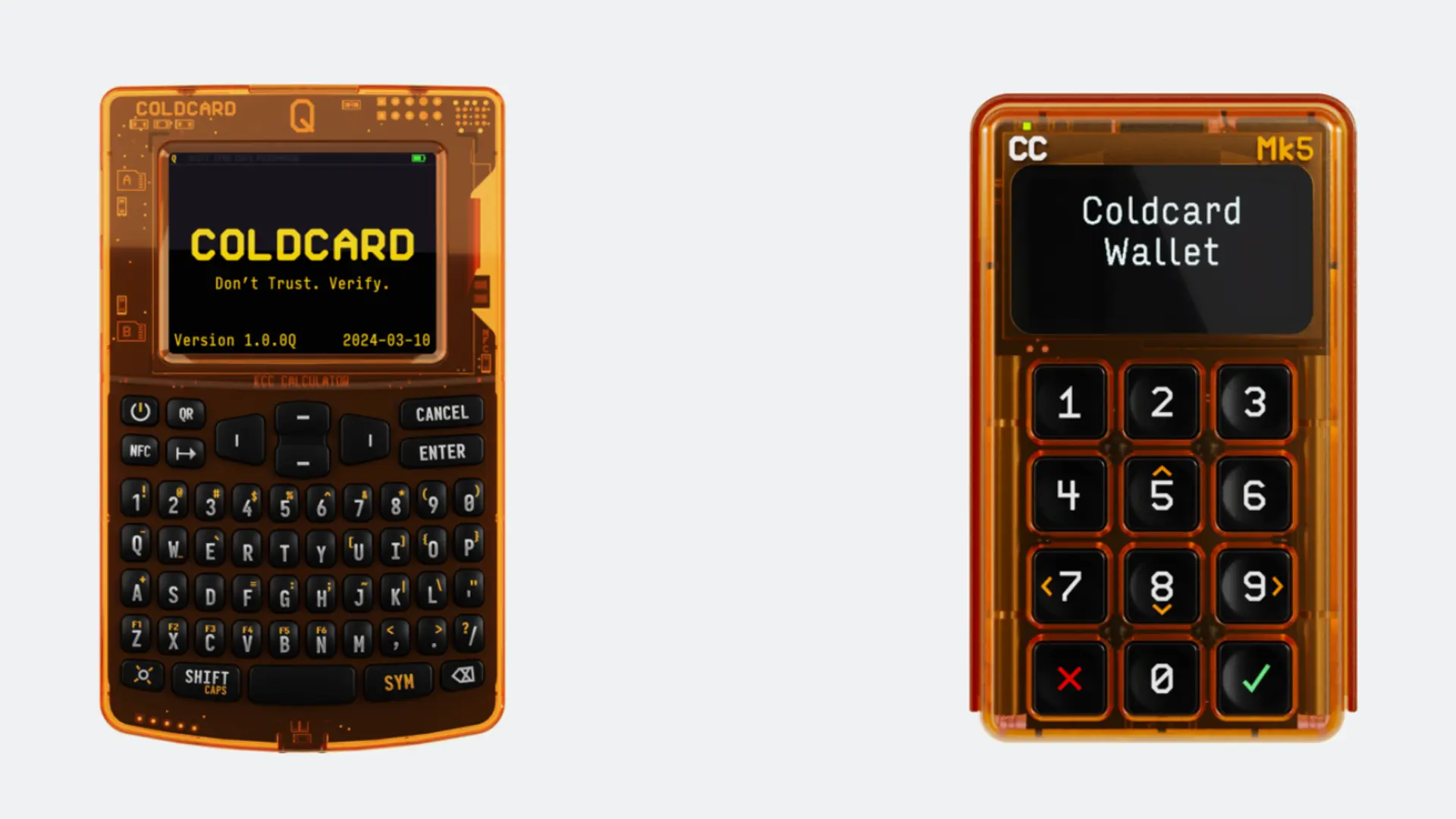
Coldcard, the popular bitcoin hardware wallet maker, has issued an urgent warning to its users: move your bitcoin immediately. The company says an exploit is still in progress and has already drained as much as $114 million from self-custodied wallets. The cold wallet maker, Coinkite, disclosed the vulnerability in a notice on its website, stressing that certain models and firmware versions remain exposed.
Key Facts
- The developers of the Coldcard bitcoin wallet urged users to move their funds amid an exploit that has already drained as much as $114 million from self-custodied wallets.
- The vulnerability affects certain Mk3 devices set up on firmware 4.0.1 or later and Mk4, Mk5 and Q devices on older firmware. Wallets created using the dice-roll option are considered safe.
- The flaw, dormant in firmware since 2021, allows attackers to guess poorly randomized seed keys and drain funds, even as bitcoin’s price has remained near $63,800 despite the warning.
What Happened?
In a security advisory released earlier this week, Coinkite revealed that an exploit targeting Coldcard hardware wallets is actively being used to steal bitcoin. The company did not immediately disclose the exact nature of the attack vector, but it was clear that the issue is severe enough to warrant an urgent call for users to move their funds to safer wallets or generate new seed phrases using the recommended dice-roll method.
The advisory states that the exploit is "still in progress", meaning that attackers are continuing to target vulnerable wallets in real time. Coinkite has not yet released a full patch, but they have provided temporary mitigation steps. The company is asking users of affected models to transfer all bitcoin to a new wallet created with a device that is not vulnerable, or to a wallet that uses a seed generated through physical dice rolls, which is believed to be immune to this particular attack.
Affected Devices and Firmware
The vulnerability is not universal across all Coldcard products. Coinkite identified the following affected configurations:
- Coldcard Mk3 devices that were set up on firmware version 4.0.1 or later.
- Coldcard Mk4, Mk5, and Q devices running older firmware versions.
The Mk3 is an older model that has been discontinued, but many users still rely on it for self-custody. The newer Mk4 and Mk5 are widely used among bitcoin enthusiasts, and the Q model is Coinkite’s latest flagship device. According to the advisory, wallets that were created using the dice-roll option—where users generate their seed phrase manually using physical dice—are not affected.
The Dice-Roll Exception
Coldcard has long been known for its emphasis on physical randomness and user-controlled seed generation. The dice-roll feature allows users to generate a 24-word seed phrase using a physical set of dice, ensuring that the entropy comes from a completely offline, user-controlled source. This method is now being recommended as the safest option for users who need to create a new wallet immediately.
Coinkite’s advice is clear: if you have an affected device and you did not use the dice-roll method, move your bitcoin to a new wallet that was created with a properly randomized seed. The company also advises users to avoid relying on the built-in random number generator of any affected device until a full fix is released.
How the Exploit Works
Although Coinkite has not yet published a detailed post-mortem, security researchers speculate that the flaw lies in the random number generation (RNG) process used by the firmware. The vulnerability appears to allow attackers to guess poorly randomized seed keys. A seed phrase is essentially a sequence of random words that generates a user’s private keys; if the randomness is weak, an attacker can narrow down the possible seed combinations and eventually derive the private keys.
The flaw has been dormant in firmware since 2021, meaning that for years, users may have been unknowingly creating wallets with insufficient entropy. Attackers likely discovered the weakness and have been systematically scanning the blockchain for wallets with addresses that match the weak key patterns. The $114 million in losses is a stark reminder that even hardware wallets—often considered the gold standard for bitcoin self-custody—are not immune to software-level vulnerabilities.
Background: Coldcard and Self-Custody
Coldcard, manufactured by the Canadian company Coinkite, has built a loyal following among bitcoin maximalists and privacy advocates. Unlike many other hardware wallets, Coldcard is intentionally minimalistic, with no Bluetooth, USB-C, or wireless connectivity. It is designed to be an air-gapped device that signs transactions offline, making it resistant to remote hacking. The device has also been praised for its open-source firmware and advanced features like PSBT (Partially Signed Bitcoin Transactions) support and the ability to run a fully offline wallet.
The company was founded in 2014 by Rodolfo Novak (also known as NVK) and has grown to become one of the most trusted names in the bitcoin hardware space. Coldcard devices are often recommended by influential figures in the bitcoin community as a secure way to hold large amounts of BTC. This incident is therefore particularly concerning because it strikes at the very trust that underpins the product’s reputation.
Broader Implications for Hardware Wallets
The Coldcard exploit is part of a recent wave of attacks targeting bitcoin infrastructure. Just hours before the Coldcard advisory was published, another infrastructure exploit drained Lightning payment servers. Bitcoin holders are also being warned about risks related to selling coins from a BIP-110 fork. These incidents highlight the growing sophistication of attackers who are now zeroing in on the tools that bitcoiners use to secure their wealth.
Hardware wallets are widely regarded as the safest way to store bitcoin for long-term holders. They are supposed to keep private keys offline, away from internet-connected devices that could be compromised. However, this exploit demonstrates that the security of a hardware wallet depends heavily on the quality of its random number generation. If the device’s firmware generates seeds using a flawed RNG, the physical security of the device becomes irrelevant.
The attack also raises questions about how other hardware wallet manufacturers implement their RNG. While there is no evidence that Ledger, Trezor, or other brands are affected, this incident is a reminder that all hardware wallets are, at their core, computers. They are only as secure as the software running on them.
What Users Should Do Now
Coinkite has issued the following immediate recommendations for Coldcard users:
- If you have an affected device (Mk3 set up on firmware 4.0.1 or later, or Mk4/Mk5/Q on older firmware), move your bitcoin to a new wallet immediately.
- Use the dice-roll option to generate a new seed phrase, or migrate to a different hardware wallet that is not affected by this vulnerability.
- Do not use the built-in seed generator on affected devices until Coinkite releases a full firmware patch.
- If you are unsure whether your device is affected, check the firmware version and the method used to create your seed phrase. When in doubt, assume your wallet is at risk.
The company has also stated that it is working on a firmware update to address the issue, but in the meantime, the only safe course of action is to move funds to a wallet with a properly randomized seed. Users who have been affected are encouraged to file a report with Coinkite’s support team, though the company notes that recovering funds from a compromised wallet may be impossible.
Bitcoin’s price has remained relatively stable near $63,800 despite the warning, suggesting that the market has not yet fully priced in the potential fallout from this exploit. However, for the individuals who have lost funds, the impact is devastating. Self-custody is one of the core tenets of bitcoin, and incidents like this underscore the importance of understanding the tools and protocols that protect one’s assets.
As the situation continues to develop, Coldcard users are urged to stay informed by checking Coinkite’s official channels for updates. The exploit is still in progress, and no one with an affected device should delay taking action. Move your bitcoin, generate a new seed with physical dice, and wait for a verified fix before returning to the Coldcard ecosystem.
Source:Coindesk News