

More affordable lidar sensors from China are becoming increasingly attractive to American automakers, but new concerns about national security could complicate their adoption. A U.S. Department of Energy laboratory is reportedly investigating whether Chinese-made lidar systems pose cybersecurity risks if they become widely used in vehicles across the country.
According to a report citing two unnamed sources familiar with the matter, the Idaho National Laboratory is looking into whether Chinese-made lidar sensors could present cybersecurity threats when integrated into U.S. vehicles. The review is said to be funded by a company or group of companies in the electric and autonomous vehicle industry, though the specific backers have not been identified. The sources said the tests are focused on uncovering potential cybersecurity vulnerabilities and could help settle growing concerns in Washington over whether Chinese lidar poses a national security risk.
The Idaho National Laboratory did not immediately respond to a request for comment. However, a spokesperson for the lab previously told reporters that “this isn’t a project that we’re at liberty to discuss with reporters.” That statement underscores the sensitivity of the matter and the unusual nature of a national laboratory conducting security assessments at the request of private industry.
What Is Lidar and Why Does It Matter?
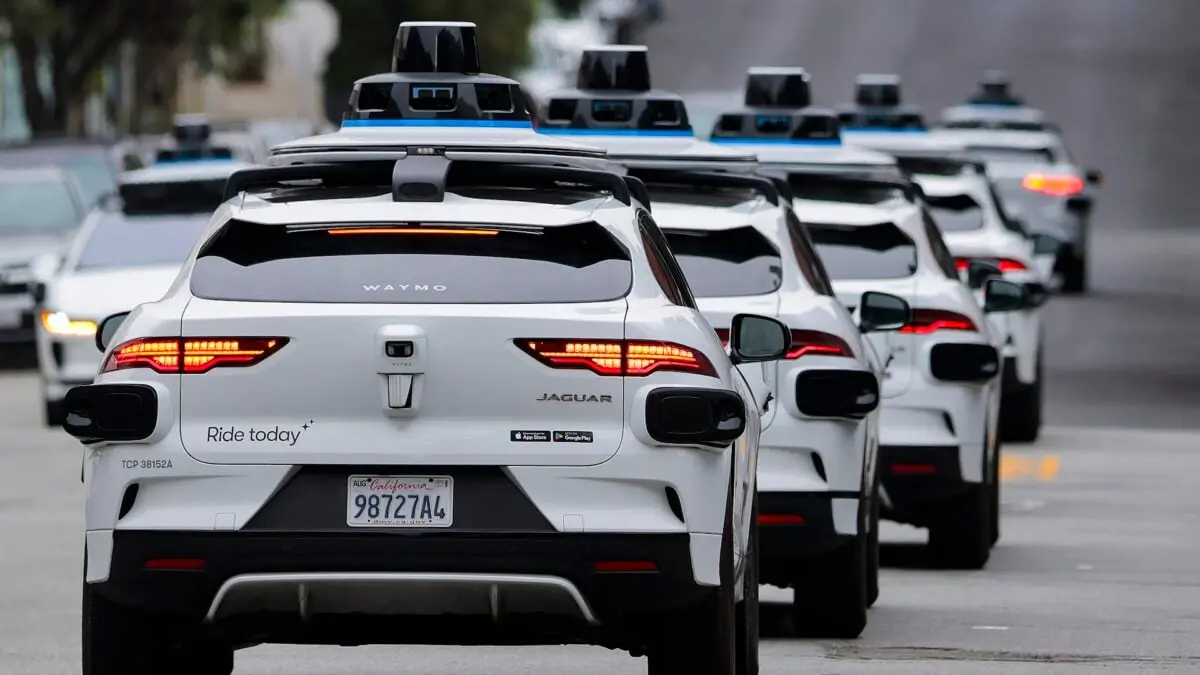
Lidar, which stands for Light Detection and Ranging, uses pulses of laser light to measure distances and create detailed three-dimensional maps of the surrounding environment. The technology is widely regarded as a critical component for self-driving vehicles, enabling them to detect pedestrians, other vehicles, obstacles, and road features with high precision. Lidar sensors are often mounted on the roofs or bumpers of autonomous test vehicles and are considered by many engineers to be essential for achieving safe and reliable autonomous driving.
The technology has been under development for decades, but its automotive applications have expanded rapidly in recent years. Companies ranging from startup robotaxi operators to established automakers have integrated lidar into their advanced driver-assistance systems. The sensors are also used in other fields, including mapping, agriculture, and infrastructure inspection, but the automotive market is expected to be the largest source of future demand.
Lidar works by emitting rapid laser pulses and measuring the time it takes for the light to bounce back from objects in the environment. This information is used to construct a real-time 3D model of the vehicle’s surroundings. Unlike cameras, lidar does not rely on ambient light and can operate in darkness. Unlike radar, it provides much higher resolution and can distinguish between different types of objects. These characteristics make lidar a powerful complement to camera- and radar-based perception systems.
Tesla’s Exception and the Industry’s Shift
One notable exception in the auto industry is Tesla. CEO Elon Musk has long argued that fully autonomous driving can be achieved with cameras and artificial intelligence alone, without lidar. Musk has publicly called lidar a “fool’s errand” and said that “anyone relying on LiDAR is doomed.” Tesla has pursued a vision-based approach using cameras and neural networks, a strategy that has drawn both praise and criticism from industry experts.
Despite Tesla’s stance, lidar has become dramatically cheaper in recent years, driven in large part by Chinese manufacturers. Sensors that once cost tens of thousands of dollars can now be purchased for just a few hundred dollars. This price plunge has made the technology increasingly attractive to American automakers that want to enhance their driver-assistance systems without inflating vehicle costs.
The falling cost of lidar has also opened the door to broader adoption in mass-market vehicles. Earlier generations of lidar were too expensive for anything beyond luxury or research vehicles. Now, low-cost solid-state lidar sensors are being considered for production models from several major automakers. The shift has created a competitive market in which Chinese suppliers have come to dominate. According to industry analysts, Chinese lidar companies have leveraged advanced manufacturing techniques, government support, and a vast domestic electric vehicle market to achieve scale and cost advantages that competitors outside China have struggled to match.
Rivian and the Race for Domestic Production
Rivian CEO RJ Scaringe told Reuters earlier this year that the company was considering producing lidar sensors in the United States using Chinese technology, potentially through a joint venture. Scaringe said that when it comes to lidar sensors costing just a few hundred dollars, “all the real choices are coming out of China.” He also said other automakers were involved in discussions about potentially building up production outside China.
“A number of different car manufacturers are thinking about how they could do that either together, or at least through a shared alignment to say, hey, let’s develop production capacity in the United States for this, or at least outside China,” Scaringe said. That statement highlights the dilemma facing the industry: Chinese lidar technology is widely considered the most advanced and cost-effective, but relying on it carries potential geopolitical and security risks.
The idea of producing Chinese-designed lidar in the U.S. is a compromise that could allow automakers to tap into the cost benefits while addressing national security concerns. A joint venture between an American automaker and a Chinese sensor maker could involve licensing agreements, technology transfers, and domestic manufacturing facilities. However, such arrangements are likely to face scrutiny from regulators and lawmakers who have become increasingly wary of Chinese technology in critical infrastructure.
Legislative and Regulatory Actions
Lawmakers in Washington have already begun moving to restrict Chinese-made lidar. Congress has proposed at least two bills that would ban the use of Chinese lidar sensors in U.S. vehicles. The Commerce Department has separately placed restrictions on Chinese- and Russian-connected car technology, including certain connected vehicle systems that could pose risks to national security.
The proposed legislation is part of a broader pattern of escalating tensions between the United States and China over technology. Over the past few years, the U.S. government has taken steps to restrict Chinese telecommunications equipment, semiconductors, drones, and other technologies that are considered sensitive. Lidar sensors have become the latest focus of concern because they are essentially sensors that can gather high-resolution data about the environment in which a vehicle operates.
Lawmakers and security officials have raised concerns that Chinese-made lidar sensors could collect sensitive information and transmit it back to China, or potentially be exploited to remotely disable vehicles that rely on them. These scenarios, while plausible, remain largely theoretical. As one report noted, “concerns about widespread disabling of Chinese lidar remain just that — concerns.”
Potential Security Risks and Data Collection
The primary security risks associated with lidar sensors stem from their ability to collect vast amounts of data about the vehicle and its surroundings. A lidar sensor continuously scans the environment, recording detailed measurements that can be used to reconstruct maps of roads, buildings, and other infrastructure. If that data were transmitted to a foreign government or malicious actors, it could potentially be used for surveillance, espionage, or military planning.
Another concern is the possibility that an adversary could remotely gain access to a vehicle’s lidar system and manipulate it. An attacker who can control the lidar data feed could potentially trick the vehicle’s perception system into misidentifying objects, causing it to brake suddenly, swerve, or fail to detect obstacles. In a worst-case scenario, an attacker might be able to disable the vehicle entirely, creating a dangerous situation for the driver and others on the road.
However, these concerns are not unique to Chinese-made lidar. Any sensor or component with a network connection could theoretically be compromised. The challenge for automakers and regulators is determining whether the risk is elevated for Chinese suppliers due to potential government pressure to cooperate with intelligence agencies or whether the technology itself contains hidden vulnerabilities.
The Department of Energy lab investigation is likely to focus on these questions. The Idaho National Laboratory, which is part of the DOE system, has extensive expertise in cybersecurity and critical infrastructure protection. The lab has a history of testing industrial control systems, power grid components, and other sensitive technologies for vulnerabilities. Its involvement in evaluating lidar sensors suggests that the outcome of the investigation could carry significant weight in policy debates.
Private Industry’s Role
The fact that the investigation is being funded by private companies rather than the government is unusual but not unprecedented. It suggests that the electric and autonomous vehicle industry itself is searching for answers about the safety and security of Chinese lidar. The companies involved may be seeking clarity so they can make informed decisions about whether to adopt Chinese lidar or develop alternative suppliers.
There is also a competitive dimension to the industry’s interest. American automakers and technology companies are eager to maintain access to the most advanced and affordable lidar technology. If Chinese suppliers were banned outright, they would need to find alternative sources, which could increase costs and delay product development. On the other hand, if the security review clears Chinese lidar, it could validate the technology and pave the way for broader adoption.
The private funding of the investigation also raises questions about the government’s role in evaluating technology used by the private sector. The DOE lab’s involvement lends a degree of objectivity, but the fact that industry is footing the bill could be seen as a way for automakers to obtain a favorable assessment. The lab’s reluctance to discuss the project publicly might be intended to preserve its independence and avoid the appearance of a rubber-stamp review.
Broader Implications for U.S.-China Tech Competition
The debate over Chinese lidar is part of a larger confrontation between Washington and Beijing over technology dominance. Electric vehicles and autonomous driving are seen as key strategic industries for both countries, and control over critical components is a central part of that rivalry. China has made massive investments in its electric vehicle supply chain, including battery production, rare earth processing, and autonomous driving technology. Chinese lidar manufacturers have benefited from this ecosystem and have gained a global market lead.
U.S. policymakers have responded with a mix of tariffs, export controls, and legislative proposals aimed at reducing dependence on Chinese technology. The proposed bans on Chinese lidar would be a significant step in that direction, but they would also disrupt the supply chains of American automakers that are eager to use affordable sensors. The tension between economic competitiveness and national security is likely to persist for the foreseeable future.
For automakers, the stakes are high. The outcome of the investigation could determine whether they can continue to use Chinese lidar in their vehicles or whether they will be forced to seek alternative suppliers in the U.S., Europe, or other regions. The uncertainty itself is a challenge, as companies need to plan future models and technology roadmaps years in advance.
In the meantime, the industry is watching closely. The private-sector-funded review at Idaho National Laboratory could become a model for how other critical technologies are evaluated in the future. It also represents an attempt to inject scientific rigor into what is often a politically charged debate. For now, the situation remains in flux, with private industry, government labs, and lawmakers all trying to determine whether the cost savings of Chinese lidar are worth the potential risks.
Source:Gizmodo News