

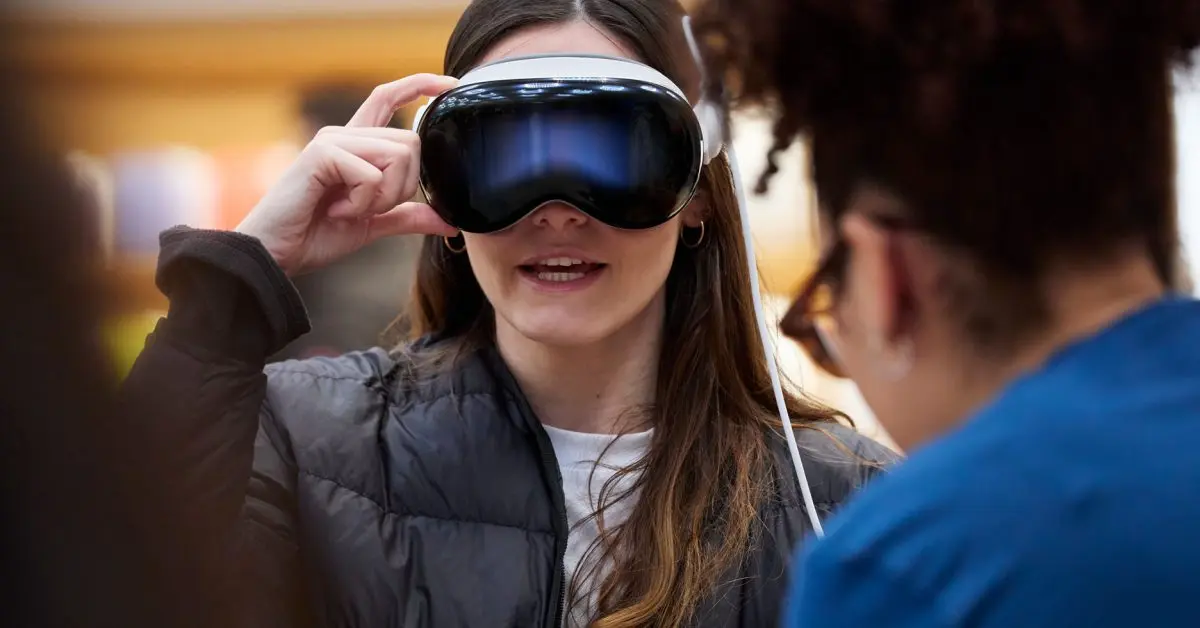
OpenAI has made another significant hire from Apple, securing Paul Meade, the executive who was in charge of Apple's Vision Pro headset and its nascent smart glasses project. According to reports from Bloomberg, Meade is set to leave Apple next week and will immediately join OpenAI's hardware subsidiary, io, to work on a new family of AI-powered devices.
This move continues a four-year trend of OpenAI poaching key talent from Apple's hardware and design teams. Last year, OpenAI announced a formal partnership with former Apple design chief Jony Ive and several members of his LoveFrom design studio to form io. The subsidiary is dedicated to creating AI-first consumer hardware, a category that remains largely undefined but is expected to challenge existing paradigms in personal computing and wearable technology.
Paul Meade's Career at Apple
Paul Meade had been a vice president at Apple, leading the Vision Products Group (VPG) for the past seven years. Under his leadership, the VPG was responsible for engineering the Apple Vision Pro, the company's mixed-reality headset that launched in early 2024. The device, which blends augmented and virtual reality with advanced eye and hand tracking, represented Apple's biggest new product category since the Apple Watch and iPhone.
Meade's role extended beyond the Vision Pro. For the past two years, he also spearheaded Apple's efforts to develop its first smart glasses, a product expected to be released in late 2027. Those glasses aim to deliver a more lightweight, all-day wearable form factor compared to the headset, incorporating features like translucent displays and advanced AI integrations. Apple's smart glasses project has been kept under tight secrecy, with multiple design iterations and supply chain challenges. Meade's departure puts a question mark over those timelines.
Before joining the VPG in 2017, Meade had a rich history at Apple. He was a key iPad manager during the device's debut in 2010, helping to scale production and integrate the new touch interface. In 2012, he became head of iPhone program management, overseeing the launch of several critical iPhone generations, including the iPhone 5, 6, and X. He moved to the VPG in 2017 as hardware engineering lead and took over all hardware engineering in 2019, making him one of the most senior hardware executives at Apple.
OpenAI's Hardware Ambitions
OpenAI's hardware ambitions have been an open secret in the tech industry. The company, best known for its GPT large language models and ChatGPT, has been investing heavily in custom silicon and hardware design. The io subsidiary, led by Jony Ive, is tasked with creating devices that integrate seamlessly with OpenAI's AI systems, potentially offering a new type of personal assistant that goes beyond smartphone apps.
Meade's hire brings deep hardware engineering expertise to OpenAI. His experience in bringing mass-market devices like the iPad and iPhone to production, combined with his work on the complex Vision Pro, makes him ideal for the challenges of building AI-first hardware. OpenAI's devices are expected to be an alternative to existing wearables like smart glasses and headsets, but with a focus on natural language interaction and contextual AI.
This is not the first time OpenAI has recruited from Apple. In late 2025, the company hired Evans Hankey, Apple's former vice president of Industrial Design, who had led Apple's design team for three years after Jony Ive's departure. Tang Ten, another longtime Apple designer who worked on the iPhone and MacBook lines, also joined io around the same time. These moves signal OpenAI's intent to build a world-class hardware team capable of competing with Apple's own design and engineering prowess.
Impact on Apple's Vision Products Group
Meade's departure leaves a significant gap in Apple's VPG. Many of his responsibilities will now fall to Fletcher Rothkopf, his longtime deputy who has been in charge of product design for the Vision Pro and smart glasses efforts. Rothkopf is expected to take over day-to-day leadership of the VPG, reporting indirectly to Johny Srouji, Apple's chief hardware officer.
The reshuffling comes amid a broader organizational change at Apple. Last month, John Ternus was appointed as Apple's next CEO, replacing Tim Cook. As part of that transition, Johny Srouji was promoted to chief hardware officer, taking over the role previously held by Ternus. Srouji immediately initiated a controversial shake-up of Apple's hardware engineering unit, reassigning several vice presidents and creating a new layer of management.
Under the new structure, Meade and other hardware leaders now report to Tom Marieb, the new vice president of hardware engineering, rather than directly to Srouji. Marieb in turn reports to Srouji, effectively pushing many executives down a level in the organization. This demotion in reporting structure was cited as a key reason for Meade's decision to leave. Several other vice presidents have also expressed dissatisfaction with the changes, which could lead to further departures.
The Vision Pro itself has had a mixed reception since its launch. While praised for its technological innovation and premium build quality, sales have been slower than expected due to the high $3,499 price tag and a limited app ecosystem. Apple has been working on a successor model with a lower price point and reduced weight, but that project may be impacted by the leadership void. The smart glasses project, which is still years from launch, could face more significant delays without Meade's oversight.
Broader Industry Context
The battle for talent between Apple and OpenAI is emblematic of the larger shift in the tech industry. As AI becomes a central component of consumer devices, companies like OpenAI are aggressively building hardware capabilities, while Apple is investing heavily in generative AI. Apple recently launched Apple Intelligence, its suite of AI features integrated into iOS, macOS, and visionOS. However, the company has admitted it is behind rivals like OpenAI and Google in large language model performance.
OpenAI's hiring of Meade, Hankey, and others gives it access to deep expertise in building successful hardware at scale. The io subsidiary is rumored to be working on a dedicated AI device that could replace the smartphone as the primary personal device, though such a product is likely years away from launch. Jony Ive has described the project as the most important of his career, surpassing even the original iPhone in terms of ambition.
The smart glasses space is also heating up. Meta has made substantial progress with its Ray-Ban Stories and Quest headsets, while Google is developing an updated version of Google Glass for enterprise use. Apple's own smart glasses were seen as a potential new revenue stream, but the loss of Meade may slow momentum. Meanwhile, OpenAI's io subsidiary is reportedly exploring a lightweight eyeglass form factor that could be paired with ChatGPT for real-time visual and audio assistance.
The competition for talent is likely to continue as both companies vie for dominance in the next computing era. Meade's move is a clear win for OpenAI, but it also underscores the challenges Apple faces in retaining its top hardware engineers during a period of organizational upheaval. The tech world will be watching closely to see how both Apple and OpenAI adapt to these changes in the coming months.
Source:9to5Mac News