

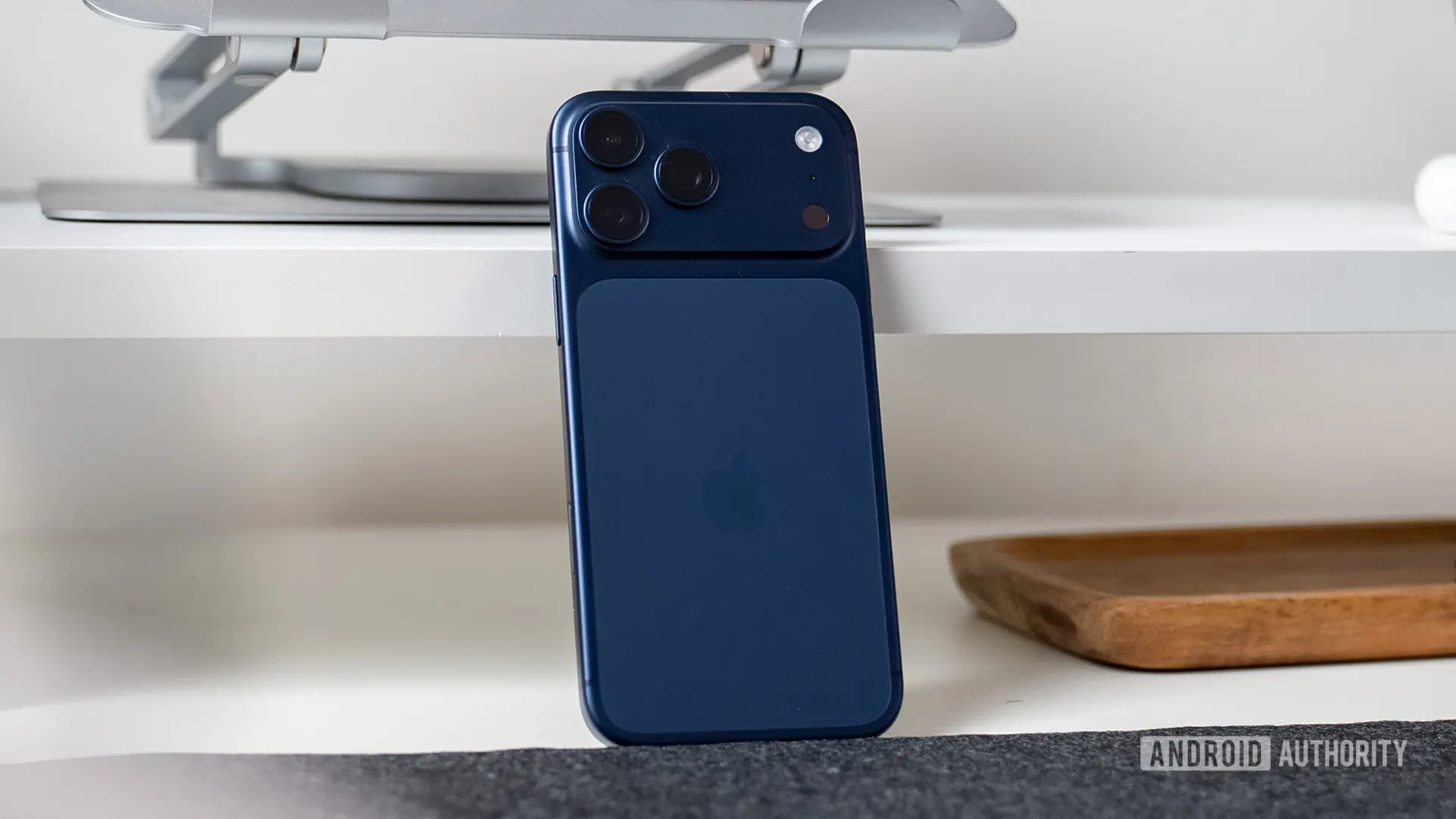
Battery capacity has long been a battleground in the smartphone industry, with Android manufacturers like Samsung, OnePlus, and Xiaomi steadily increasing the size of their batteries over the past few generations. Many flagships now ship with cells well above 5,000mAh, a threshold that was once considered exceptional. Apple, however, has historically taken a different approach. Rather than chasing raw battery numbers, the company has relied on tight integration between its custom silicon and iOS, optimizing power efficiency to deliver all-day battery life from relatively smaller batteries.
That philosophy may be undergoing a significant shift. According to a recent leak from China's 3C regulatory database, Apple's upcoming iPhone 18 Pro Max could feature a battery as large as 5,567mAh in US models. This information, first spotted by the reliable tipster Digital Chat Station on Weibo and later reported by MacRumors, suggests Apple is finally embracing larger batteries as a key selling point. The leak also reveals a 5,391mAh version for the Chinese market and smaller but still notable upgrades for the iPhone 18 Pro.
Breaking Down the Numbers
The regulatory filings indicate that the iPhone 18 Pro will carry a 4,056mAh battery in its Chinese variant and a 4,288mAh battery in the US model. This represents a modest increase from the iPhone 17 Pro's 3,988mAh (China) and 4,252mAh (US) cells. However, the jump for the Pro Max is far more dramatic: from 4,823mAh (China) and 5,088mAh (US) in the iPhone 17 Pro Max to 5,391mAh and 5,567mAh respectively. If these figures are accurate, the iPhone 18 Pro Max would not only close the gap with many Android flagships but surpass some of them.
For context, the Samsung Galaxy S25 Ultra currently packs a 5,000mAh battery, while the OnePlus 13 boasts a 6,000mAh cell in certain markets. A 5,567mAh battery would put the iPhone ahead of Samsung's latest flagship and competitive with other high-capacity devices. This is a remarkable turnaround for a company that has traditionally prioritized thickness and design over battery size.
Why the Regional Difference?
The disparity between US and Chinese battery capacities stems from a hardware design choice that Apple made with the iPhone 14 series. Starting with that generation, Apple removed the physical SIM tray from US models, adopting an eSIM-only approach. This freed up a surprising amount of internal space, which the company has since used to enlarge the battery. Chinese models still require a physical SIM slot, which takes up a small but significant volume inside the chassis. As a result, US versions of the iPhone consistently have slightly larger batteries than their Chinese counterparts.
This regional variance is not new, but it highlights Apple's ongoing effort to maximize battery capacity without increasing the phone's overall footprint. The removal of the SIM tray in the US has been controversial among some users who prefer the flexibility of physical SIMs, but for many, the trade-off is worth it for longer battery life.
The Bigger Picture: Efficiency Meets Capacity
It's not just about the battery size. Apple's A-series chips have consistently set benchmarks for performance per watt. The iPhone 18 Pro Max is expected to feature a next-generation A19 Pro chip, likely built on an even more refined process node. Coupled with more efficient display technology—possibly a new generation of LTPO OLED panels—the combination could yield exceptional real-world endurance. This mirrors the strategy of top Android manufacturers, who have shifted from simply increasing battery size to pairing larger cells with more efficient processors.
For instance, Qualcomm's Snapdragon 8 Gen 4 is rumored to bring significant efficiency gains, and Samsung's Exynos 2500 may follow suit. However, Apple's vertical integration gives it a unique advantage: it can fine-tune every aspect of power management from the silicon up, which often results in better battery performance per milliampere-hour compared to Android competitors.
What This Means for Samsung and Android
If the iPhone 18 Pro Max indeed sports a 5,567mAh battery, it would represent a direct challenge to Samsung's supremacy in battery capacity among flagship phones. Samsung has consistently pushed its Galaxy S series toward larger batteries, and the Galaxy S25 Ultra's 5,000mAh cell was already considered generous. But Apple's potential leap would not only match but exceed that, potentially erasing one of the last remaining hardware gaps between the two ecosystems.
Moreover, Apple's software optimization means that even a modest increase in capacity can translate into disproportionately longer battery life. With a 5,567mAh cell and the efficiency of the A19 Pro, the iPhone 18 Pro Max could easily achieve two days of moderate use, a milestone that has eluded many Android devices despite their larger batteries.
This development should worry Samsung's product planners. For years, they have relied on the narrative that Android phones offer larger batteries and more flexibility, while iPhones are more restricted. With this leak, Apple is signaling a willingness to compete head-on in the battery race, potentially leveling the playing field.
Historical Context: Apple's Battery Evolution
Apple has a long history of conservative battery sizing. The iPhone 6 introduced a 1,810mAh battery, which was considered adequate for its time. The iPhone X pushed to 2,716mAh, and the iPhone 11 Pro Max reached 3,969mAh. It was only with the iPhone 12 series that Apple began exceeding 3,000mAh for its Pro Max models, hitting 3,687mAh. The iPhone 13 Pro Max jumped to 4,352mAh, and the iPhone 14 Pro Max reached 4,323mAh. The iPhone 15 Pro Max saw a modest increase to 4,422mAh, while the iPhone 16 Pro Max improved to 4,685mAh.
The iPhone 17 Pro Max's 5,088mAh (US) already represented a significant leap, and the rumored 5,567mAh would continue that trend. This trajectory shows that Apple is increasingly willing to allocate internal volume to batteries, perhaps at the expense of other components or thinner designs. However, the company has also been investing in other battery technologies, such as stacked battery cells and higher energy density chemistries, which could explain how they are packing more capacity into the same physical space.
Regulatory Filings as a Reliable Source
Regulatory databases like China's 3C (China Compulsory Certification) are often the first places where unannounced product specs leak. These filings are mandatory for devices sold in China, and they typically include battery capacity, charging details, and sometimes even dimensions. While they are not infallible—occasionally, listings are for testing units with different specs—they have a strong track record of accuracy for final retail hardware. Past leaks from similar databases have correctly predicted battery capacities for the iPhone 14, 15, and 16 series, as well as numerous iPad and Mac models.
Therefore, it's reasonable to treat this leak with a high degree of confidence, though Apple has not commented and will likely not confirm until the official launch, which is expected in September 2025.
Additional Considerations: Charging Speeds and Wireless
While battery capacity is increasing, charging speeds may also see an upgrade. Apple has been slow to adopt fast wired charging, with current iPhones supporting up to 27W with a compatible charger. The iPhone 18 series could potentially bump that to 30W or even 35W, though no confirmed leaks exist yet. Wireless charging, via MagSafe, is currently capped at 15W for most models, and the new iPhones might support 20W or higher with the next generation of MagSafe chargers.
These are areas where Android phones often excel—many now support 100W or even 150W wired charging—so Apple may need to catch up. However, for many users, a larger battery that lasts longer is more important than faster charging, especially if the phone can comfortably get through a full day on a single charge.
The Impact on the Ecosystem
A larger battery in the iPhone 18 Pro Max could have ripple effects beyond just the device itself. It would enable more demanding applications, such as advanced augmented reality experiences, longer video recording times, and sustained performance for gaming and productivity tasks. It could also improve the longevity of the device, as larger batteries generally suffer less from degradation over time for the same usage patterns.
Apple's services, like Apple TV+ and Apple Arcade, would benefit from users spending more time on their devices without worrying about charging. And for professionals who rely on their iPhones for photo and video editing on the go, an extra hour or two of battery life could be a game-changer.
In summary, the iPhone 18 Pro Max appears poised to redefine Apple's approach to battery capacity, potentially making it a leader in this aspect for the first time in years. Samsung and other Android manufacturers will need to respond, either by increasing their own capacities further or by innovating in other areas such as charging speed or AI-driven power management. Regardless, consumers stand to benefit from this healthy competition.
With the expected launch later this year, we won't have long to wait to see if these leaked figures become reality. If they do, the iPhone 18 Pro Max could set a new standard for battery life in a premium smartphone.
Source:Android Authority News