

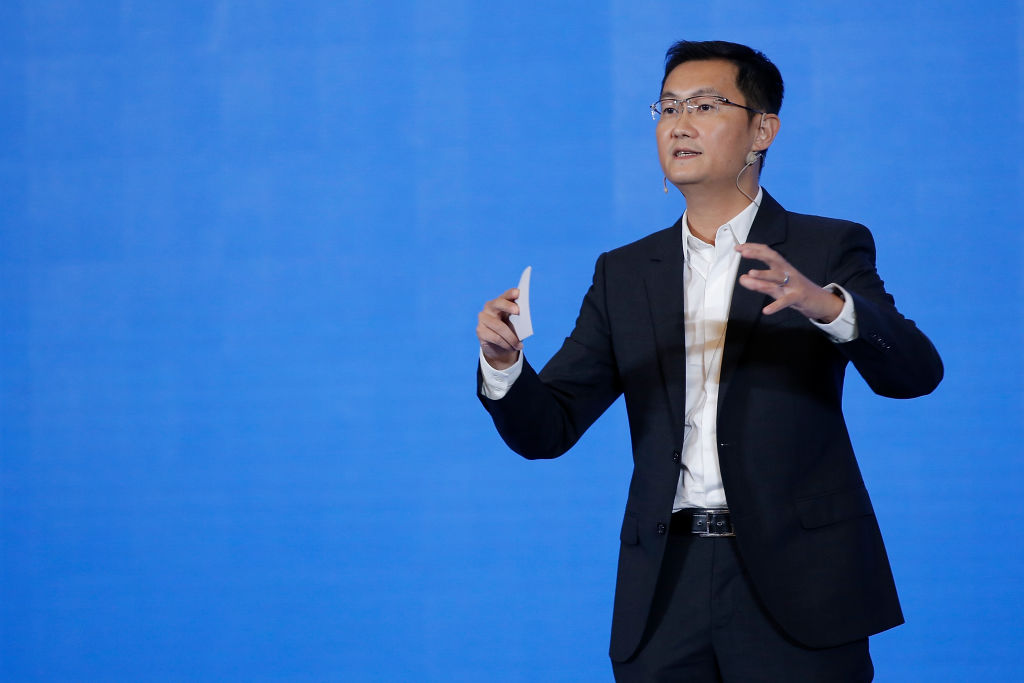
Key Facts
- Pony Ma, born Ma Huateng, is the founder and CEO of Tencent, one of China’s largest technology conglomerates.
- He is not related to Alibaba founder Jack Ma, though the two are routinely linked in discussions of China’s richest person.
- In mid-2019, Pony Ma’s net worth was about $42 billion, slightly ahead of Jack Ma’s $39 billion, but the two have repeatedly swapped places.
- Tencent was founded in 1998, when Ma was 26; an early product was a localized messaging service modeled on ICQ.
- Tencent owns WeChat, which grew to roughly 1.1 billion regular users and became central to daily life in China.
- WeChat emerged after a 2011 period of institutional self-reflection aimed at shedding Tencent’s reputation as a replicator of other companies’ ideas.
- In 2016, Ma reportedly sent top executives on a two-day, 26-kilometer hike through the Gobi Desert as a company retreat.
- His nickname and Tencent’s Chinese name both carry horse references, a motif that runs through his public identity.
A Two-Name Race at the Top
When observers try to identify the richest person in China, the conversation usually narrows to two figures: Jack Ma, the founder of Alibaba, and Pony Ma, the founder and CEO of Tencent. The shared surname is a coincidence; the two men are not related. Their rivalry is not personal in any obvious way, but it is one of the most closely watched comparisons in Chinese business because it mirrors the competition between two sprawling internet ecosystems. In mid-2019, Pony Ma held a narrow edge with a net worth of about $42 billion, while Jack Ma stood at roughly $39 billion. The gap was small enough that ordinary market swings could reverse it, and the two have generally overtaken each other over time.
Who Is Pony Ma?
Pony Ma was 47 years old in mid-2019. His Chinese name is Ma Huateng, and he built Tencent from a small start-up into a conglomerate with interests in social media, gaming, payments, cloud computing, entertainment, and investments. Compared with Jack Ma, whose public persona is often playful and theatrical, Pony Ma is known for a lower-profile style. His English nickname, Pony, is one of several horse references connected to his life and work. His surname, Ma, means horse in Chinese, and the Chinese name of Tencent, Teng Xun, has been described as a reference to the way messages were carried by horse and rider in ancient times, before the internet or modern mass communication. The nickname therefore fits neatly with the company’s name and with the image of speed and transmission that messaging technology represents.
From ICQ Clone to Internet Conglomerate
Tencent was founded in 1998, when Ma was just 26. Its first product was not a monument to original invention. It was a messaging service modeled closely on ICQ, the Israeli instant-messenger application that was popular at the time. That early decision contributed to Tencent’s reputation in China as a company that could replicate existing ideas and adapt them for local users. The strategy was not merely imitation. Tencent localized the product for Chinese conditions, including slower connections and different user habits, and the service eventually became QQ, one of the most widely used messaging platforms in the country. Tencent later found ways to make money from virtual goods, memberships, games, and digital services, and it listed in Hong Kong in 2004. Over time, the company expanded into gaming, music, video, payments, cloud services, and a vast portfolio of investments. That reach is one reason Tencent is now better described as a conglomerate than as a single messenger company.
The WeChat Breakthrough
By 2011, Tencent’s reputation as a replicator had become a strategic problem. The company undertook what was described as institutional self-reflection, and the result was WeChat. The app was not simply another chat service. It combined messaging with voice notes, social feeds, QR codes, payments, news, ride-hailing, and mini-programs that let users perform a wide range of tasks without leaving the platform. In the United States, observers often compare its features to a bundle of familiar services such as WhatsApp, Google News, Uber, and other popular apps. In China, WeChat became something closer to everyday infrastructure. It grew to around 1.1 billion regular users and embedded itself into shopping, transport, banking, social coordination, and entertainment. Mark Zuckerberg has cited WeChat as an inspiration for what he hoped to achieve with Facebook, a sign of how influential the app became beyond China’s borders.
Tencent’s Reach Beyond WeChat
Tencent’s influence is not limited to WeChat. The company became a major force in online games, including titles that generated enormous revenue and shaped Chinese internet culture. It also built a large investment arm, taking stakes in companies across entertainment, e-commerce, transport, and technology. Its financing has reached outside China as well; Tencent was among the backers of an upcoming Top Gun sequel, a detail that drew attention in the United States and showed how Chinese technology capital had become part of Hollywood production. That global reach helps explain why Pony Ma’s personal fortune is so large. His wealth is tied to the value of Tencent, and Tencent’s value is tied to its ability to operate across many parts of the digital economy at once.
Leadership and the Gobi Desert Test
Pony Ma’s leadership style can be as unusual as his nickname. In 2016, he reportedly sent all of his top executives on a demanding trek through the Gobi Desert for a company retreat. The hike lasted two days and covered 26 kilometers, and it was presented as a way to reflect the culture of the company. Such a gesture might sound eccentric, but it fits a pattern of using shared hardship and unusual experiences to build cohesion among senior leaders. Employees have reportedly expressed satisfaction with and admiration for his leadership and personality as CEO. His approach appears to rely less on public charisma than on product focus, long-term thinking, and a willingness to push his team through difficult experiences. In a business culture where founder personalities often become brands, Pony Ma remains a quieter figure, but his methods have helped Tencent become one of the most valuable technology companies in the world.
The Horse Motif and Public Persona
The horse references around Pony Ma are more than trivia. They offer a useful way to understand his public image. The name Pony suggests something smaller and less imposing than a powerful stallion, yet the company he built became a giant. His surname and Tencent’s Chinese name reinforce the connection to movement, messages, and speed. At the same time, Ma has generally avoided the kind of spotlight that follows some other Chinese billionaires. He is known for speaking carefully, focusing on technology and strategy, and letting products do much of the public talking. That contrast between a modest nickname and a massive corporate footprint is part of what makes him an intriguing figure in global business.
Why the Wealth Race Matters
The contest between Pony Ma and Jack Ma is not just a personal scoreboard. It reflects a larger rivalry between Tencent and Alibaba, two companies that have shaped how hundreds of millions of people shop, pay, communicate, and entertain themselves. Both have built ecosystems that reach into digital payments, cloud computing, entertainment, retail, and financial services. Pony Ma’s fortune rises and falls with Tencent’s share price, while Jack Ma’s wealth has been tied to Alibaba’s performance and its related businesses. Because those businesses operate in fast-moving markets, the title of China’s richest person is rarely fixed for long. The two men have traded the lead repeatedly, and each has built institutions that extend far beyond personal wealth. The race is less a permanent ranking than a snapshot of two internet empires whose competition continues to reshape China’s digital economy.
Source:Celebrity Net Worth News