

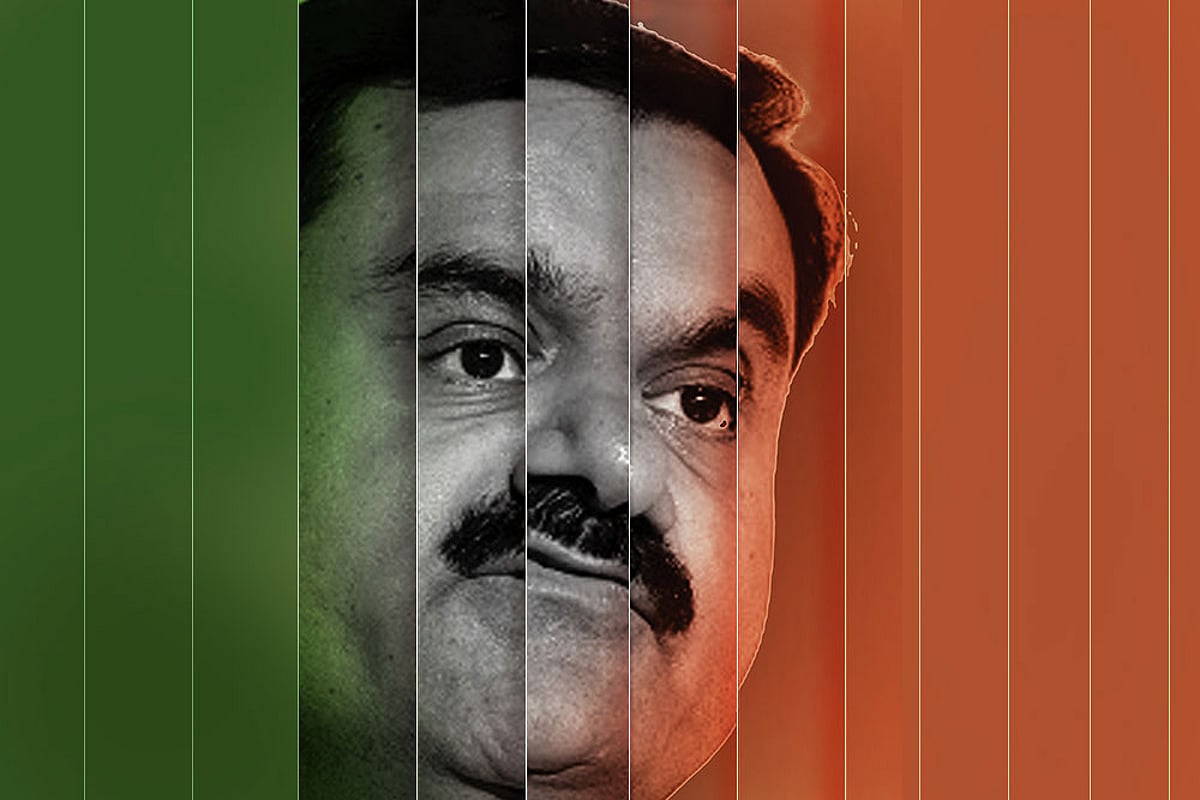
Hindenburg Shockwave and the Adani Group
When New York-based activist short-seller Hindenburg Research turned its focus on the Adani group in January, the immediate damage was financial. Allegations of fraud, stock price manipulation and the use of tax havens triggered a sweeping sell-off across the conglomerate. The group, led by billionaire Gautam Adani, saw its collective market capitalisation fall by around Rs 12 lakh crore before recovering some ground. The declines were uneven but severe. Adani Total Gas crashed 83%, Adani Transmission fell 75%, Adani Green Energy plunged 77%, Adani Enterprises declined 53%, Adani Power dropped 41%, Adani Wilmar tumbled 27%, and Adani Ports declined 19%. The group's newly acquired cement companies ACC and Ambuja Cements, along with media firm NDTV, also lost more than 20% of their value.
The Green Business at the Centre of the Storm
Every Adani group company faced stress, but the green portfolio carried a special burden. Adani Green Energy had been positioned as the vehicle for Gautam Adani's ambitious alignment with the Modi government's net-zero goals. In 2021-22, Adani outlined a $70 billion investment plan in green transition, including solar and wind power plants and giga factories for hydrogen. He told shareholders that the investment was evidence of confidence in India's green future and that renewable strength would empower green hydrogen, described as the fuel of the future. Adani Green Energy holds India's biggest renewable energy portfolio and had aimed to build 10% of the country's targeted renewable energy capacity by 2030, targeting 45 gigawatts of renewable energy by 2030. India itself plans 500 gigawatts of non-fossil fuel energy capacity by the same year. The company already operates large solar parks in Gujarat, Rajasthan and Karnataka.
Global Investors Retreat and ESG Pressures
The Hindenburg allegations led to ratings downgrades, removal from international sustainability indices, and the exit of Norway's sovereign fund Norges Bank Investment Management from its entire position in Adani Green Energy. Moody's downgraded the ratings outlook for some group companies, while MSCI said it would cut the weightings of some in its stock indices and reduce free float designations for four Adani group companies. Those four companies had a combined 0.4% weighting in the MSCI Emerging Markets Index as of January 30. Apart from Adani Enterprises, MSCI cut the free floats assigned to Adani Total Gas, Adani Transmission and ACC. TotalEnergies of France put on hold its plan to take 25% equity in the $50 billion green hydrogen project of Adani New Industries, pending audit results.
The group's response combined nationalist bluster with global investor outreach. It issued a 413-page reply to Hindenburg, pre-paid liabilities of around $2.1 billion, and raised $1.87 billion from GQG Partners, a US-based fund led by Rajiv Jain. It also planned investor road shows in London, Dubai and several US cities. Yet the green unit remained exposed to environmental, social and governance concerns. Norway-based pension fund KLP sold its entire shareholding in Adani Green Energy after it was found that the group pledged green stocks as collateral for loans via Adani Enterprises that would eventually finance the Carmichael coal mine in Australia. KLP proactively refuses investments in coal-related businesses. In 2021, it had withdrawn from Adani Ports and Special Economic Zone Limited because the company was developing a port in Myanmar on land leased from the country's military. Despite dumping Adani Green Energy, KLP continued to stay invested in India, along with Norway's Climate Investment Fund, in a solar power project developed by Italy's Enel Green Power in Rajasthan and a transmission project managed by ReNew Power in Karnataka.
Capex Delays and Debt Concerns
Media reports after the Hindenburg expose and the scrapping of Adani Enterprises' Rs 20,000 crore follow-on public offer suggested the group put aggressive investment schemes on hold. Adani Green Energy reportedly reviewed capex plans worth as much as Rs 10,000 crore for 2022-23. The group also withheld work on its Rs 34,900 crore petrochemical project in Mundra, Gujarat. These moves mattered because Adani Green Energy's growth depended on heavy capital expenditure. The company had 4,803 megawatts of solar generation capacity in operation and another 10,080 megawatts under construction. Its wind capacity stood at 647 megawatts in operation, with 2,054 megawatts under construction. Hybrid capacity, a mix of solar and wind, was 390 megawatts operational and 2,350 megawatts under construction. Its 700-megawatt wind-solar hybrid plant became fully operational at Jaisalmer, Rajasthan, combining 600 megawatts of solar and 510 megawatts of wind. In 2021, it acquired SB Energy for $3.5 billion, adding a 5-gigawatt portfolio.
Market experts were divided on the damage. Deven Choksey of KRChoksey argued that the Hindenburg report was unlikely to have a meaningful impact on the group's green energy goals. At most, it could affect the pace of capital raising. He expected the group to shift from borrowed money toward equity, which he described as more prudent once infrastructure assets are built. He also pointed to the group's cash generation: Rs 54,000 crore in EBITDA, or operating profit, in the current year, compounding at 20% annually. In four years, that figure could become Rs 1 lakh crore. He felt the Adani group could meet expansion challenges, though projects once planned for two years might now take three or three-and-a-half years.
Ravi Singhal, CEO of brokerage firm GCL, was more skeptical. He argued that Adani Green Energy would find it impossible to achieve the target of producing 25 gigawatts of green energy by 2025 because it lacked money and was selling shares to service debt rather than relying on internal cash accruals. He noted that the group had taken many loans from outside India, and rising interest rates plus an appreciating dollar made debt servicing difficult. He also called on Adani Green Energy to share its growth plans publicly, since stock investments depend on future earnings and earlier growth plans had become redundant.
The Fossil Fuel Problem and ESG Fund Exits
While Gautam Adani wanted to be seen as a co-passenger with Prime Minister Narendra Modi in India's journey toward net-zero, the group's reliance on fossil fuels remained high. That contradiction drew scrutiny from ESG-aware global funds. After the Hindenburg expose, European ESG funds invested directly or through other funds in Adani group companies reportedly dropped to 480 in the first week of March from 500 in mid-February. Only 18% of those funds had a direct stake in the companies. Market expert Avinash Gorakshakar cautioned against reading too much into the exit of European ESG funds. He pointed to GQG Partners' Rs 15,000 crore investment in the Adani group as evidence that many funds were waiting on the sidelines for clarity. Foreign investors were sitting on cash, he said, and investors should not overinterpret one ESG fund exiting Adani Green.
Revenue Mix and the Long-Term Green Bet
The Adani group earns a sizeable chunk of revenue from its flagship Adani Enterprises, which operates coal, infrastructure and airports businesses. It posted net sales of Rs 69,420 crore last financial year, while Adani Green Energy clocked net sales of Rs 5,133 crore. The recently acquired cement units ACC and Ambuja Cements had net sales of Rs 16,152 crore and Rs 28,965 crore respectively. Adani Power recorded net sales of Rs 27,711 crore, Adani Ports posted sales of Rs 15,934 crore, Adani Wilmar had sales of Rs 54,213 crore, and Adani Total Gas recorded sales of Rs 3,037 crore. Within that portfolio, green energy was meant to grow in line with the Modi government's goals, but the $70 billion investment plan became vulnerable to global perceptions about the group's governance and environmental record.
Before Adani Enterprises scrapped its FPO, it had hoped to use the money to fund capital expenditure for some projects in the green hydrogen ecosystem, improve existing airport facilities, build a greenfield expressway and repay debt. With the FPO gone and ESG concerns persistent, Gautam Adani's green businesses could not immediately take pole position in the group portfolio. Gorakshakar suggested the group would spend on green capex in a controlled way in the next financial year and become aggressive after the Lok Sabha election concludes in May 2024. Market watchers expected Modi to return as prime minister, which would be welcome news for Adani. Green energy requires heavy investment. In the near term, until elections were over, the Adani group was unlikely to get fresh equity investment from big financial institutions. The projects required incremental debt, and without loans, they might not materialise. Once the Bharatiya Janata Party returned to power, the company could again start expansion plans. For the year ahead, the friend Adani and the businessman Adani remained a fretful combination.
Source:Outlook Business News